Football lights. Friday night crowds. A favorite dress hanging on the door. The excitement of the first big dance of the school year—and, of course, flowers.
There is something wonderfully nostalgic about Homecoming.
For generations, flowers have been part of the celebration, whether tucked into a corsage, pinned to a lapel, carried in a bouquet, or worn as part of an elaborate school-spirit tradition. And while the flowers may have changed—and the way young people wear them certainly has—the sentiment behind them hasn't.
Homecoming is still about marking a moment.
And for parents, especially, it can be one of those bittersweet milestones when you realize your child is growing up much faster than you thought.
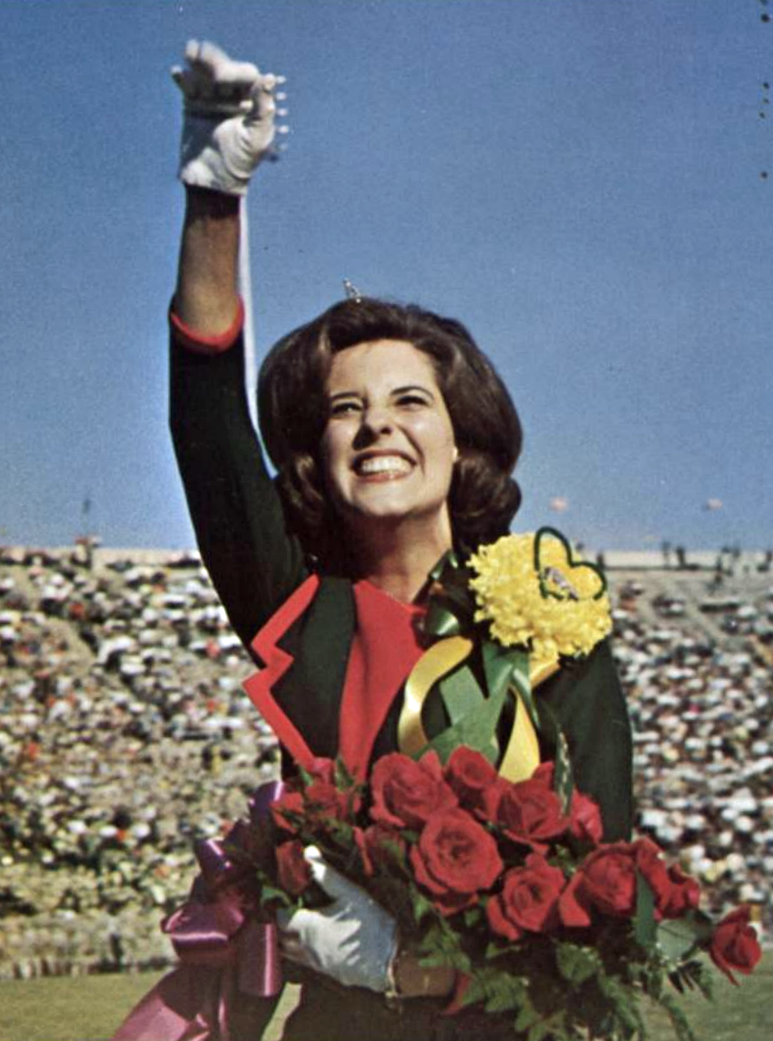
Baylor Homecoming Queen Ann Davis, 1964. Photo courtesy of https://mumtasticspirit.com/the-history-of-homecoming/
A Little Homecoming History
The Homecoming tradition itself grew out of the football culture of American colleges in the early 20th century. The University of Missouri traces its Homecoming tradition to 1911, when athletic director Chester Brewer invited alumni to “come home” for the Missouri-Kansas football game. More than 9,000 people attended, and the celebration included a football game, pep rally, parade and bonfire.
There is some historical debate over which university can truly claim the first Homecoming—the University of Illinois and other schools have earlier versions of events that resemble it—but Missouri's 1911 celebration is widely recognized as an important early model for the modern tradition.
Eventually, Homecoming made its way into high schools, bringing with it the football game, school spirit, dances, royalty, parades and, naturally, flowers.
And Then There Were the Flowers
The original Homecoming flower tradition was surprisingly simple.
The chrysanthemum, or “mum,” was a natural choice because it is a hardy fall flower and was readily available during Homecoming season. Early Homecoming mums were essentially fresh chrysanthemum corsages, often given by a date for the girl to wear to the football game or dance.
Over time, that simple corsage evolved dramatically in some parts of the country.
Texas, in particular, developed the now-famous Homecoming mum—an elaborate arrangement of ribbons, school colors, charms, names, class years and decorations. What began as a flower eventually became almost a wearable scrapbook of high school life.
And that's one of the fascinating things about Homecoming flowers: the tradition didn't disappear. It evolved.
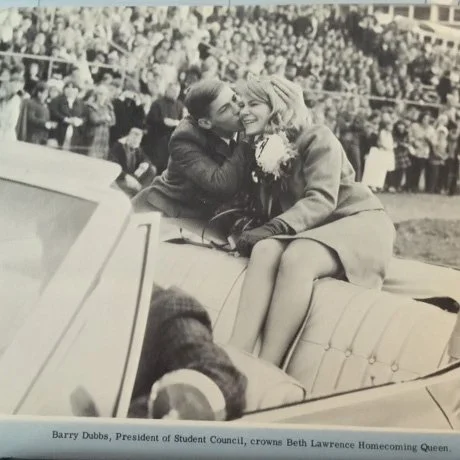
My aunt, Beth Lawrence, was crowned Homecoming Queen in the early 1970s.
Homecoming Then: A Family Memory
Here is a photo of my aunt, as Homecoming Queen.
There she is, sitting on the back of a convertible, with a giant Mum corsage, surrounded by a packed stadium. Her date is kissing her cheek, the crowd is watching, and for one little moment, you can almost imagine the noise of the football field around them.
Homecoming looked a little different then.
The flowers were pinned. The dresses were suits. The cars were longer. And there were certainly no phones in everyone's hands capturing every moment.
But the excitement?
That part feels remarkably familiar.
Homecoming Flowers Today
Today, there isn't one single definition of a Homecoming flower.
And that's what makes the tradition fun.
The classic wrist corsage and boutonniere are still popular in some areas of the country, but today's students have more choices. Floral designers are creating handheld bouquets, pocket boutonnieres, floral rings, flower crowns, and other small wearable arrangements.
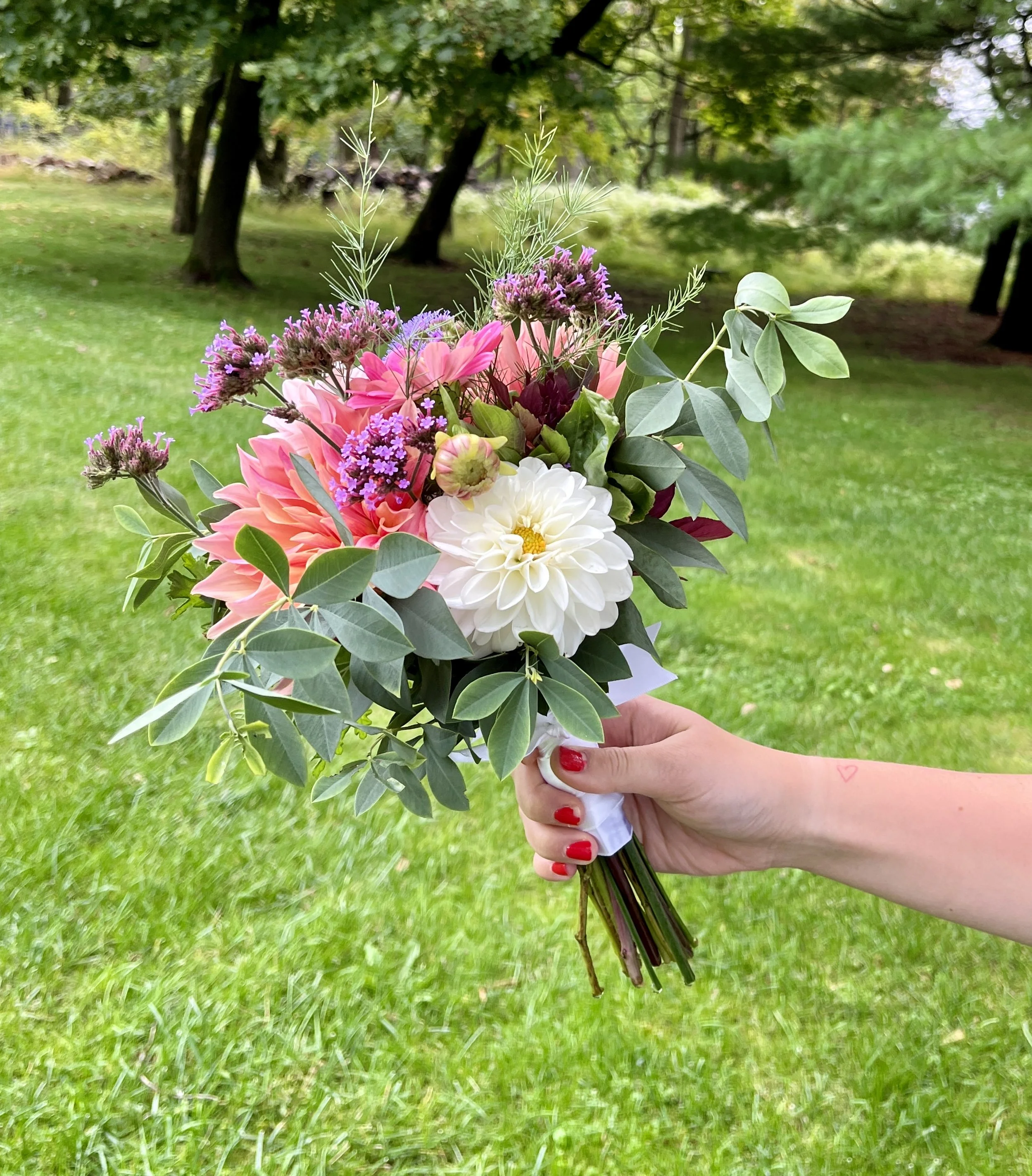
Some recent floral trends have even moved toward small handheld bouquets, offering an alternative to the traditional wrist corsage.
And I think there's something especially beautiful about that change.
Instead of flowers being something prescribed by tradition, they can become an extension of personal style.
A bouquet can coordinate with the dress.
A boutonniere can echo the flowers in a date's corsage.
A few beautiful blooms can feel more natural and garden-inspired than a heavily constructed arrangement or an oversized mum.
And for the student who doesn't want a traditional corsage at all?
That's perfectly fine too.
What About the Flowers Growing Right Here in Bucks County?
Because Homecoming happens at one of the most beautiful times of the year for flowers in Pennsylvania.
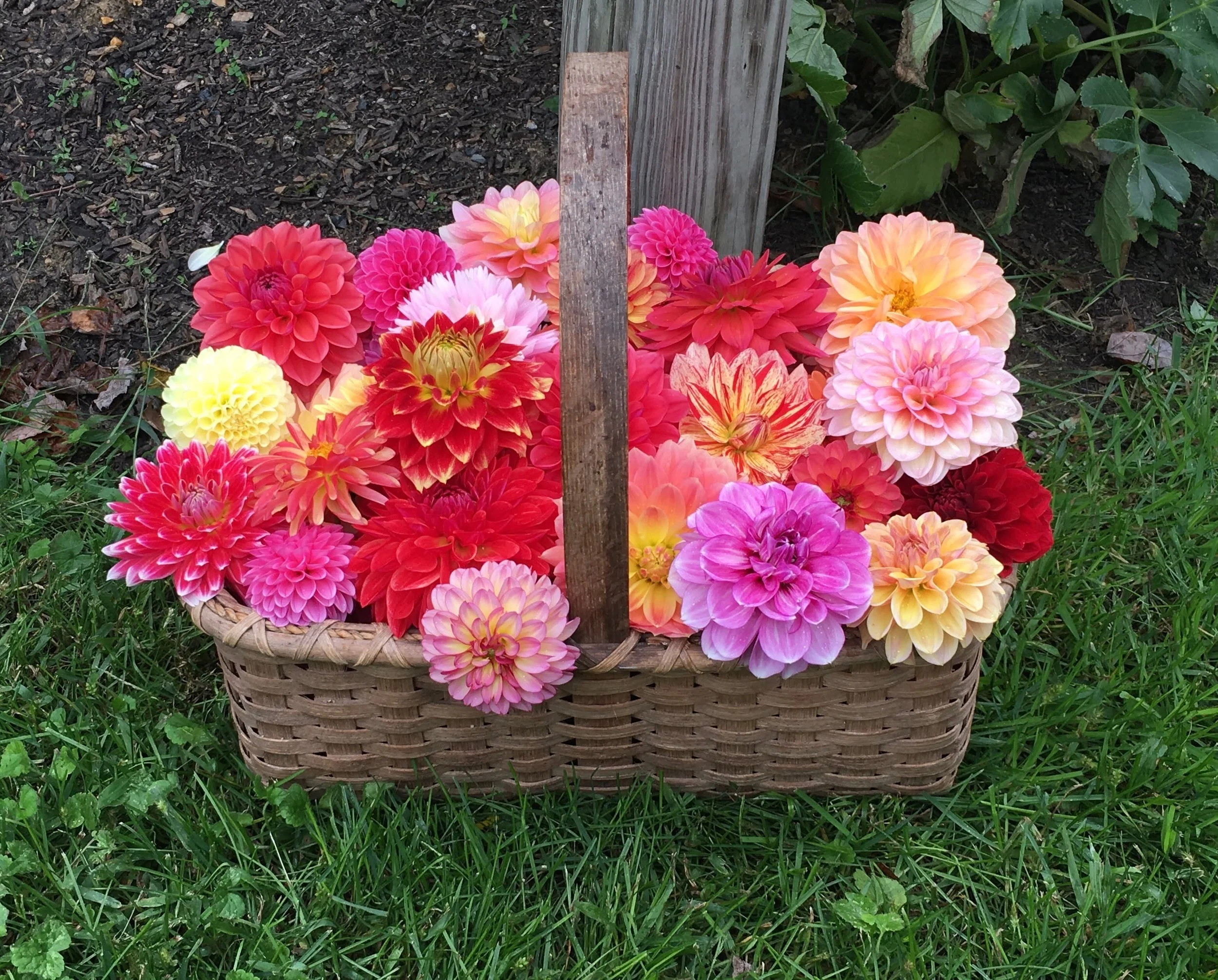
September and October are prime months for dahlias, according to Penn State Extension, making them particularly well suited to late-summer and early-fall floral arrangements.
And Bucks County has local flower growers producing seasonal blooms during exactly this window.
That means a Homecoming bouquet doesn't have to look like something ordered from a catalog.
Imagine instead:
Dinner-plate dahlias.
Soft blush blooms.
Deep burgundy.
Creamy whites.
Bright oranges.
Golden autumn tones.
A little greenery.
Flowers that actually look like September in Bucks County.
That's a very different—and very beautiful—way to think about Homecoming flowers.
A New Kind of Homecoming Bouquet
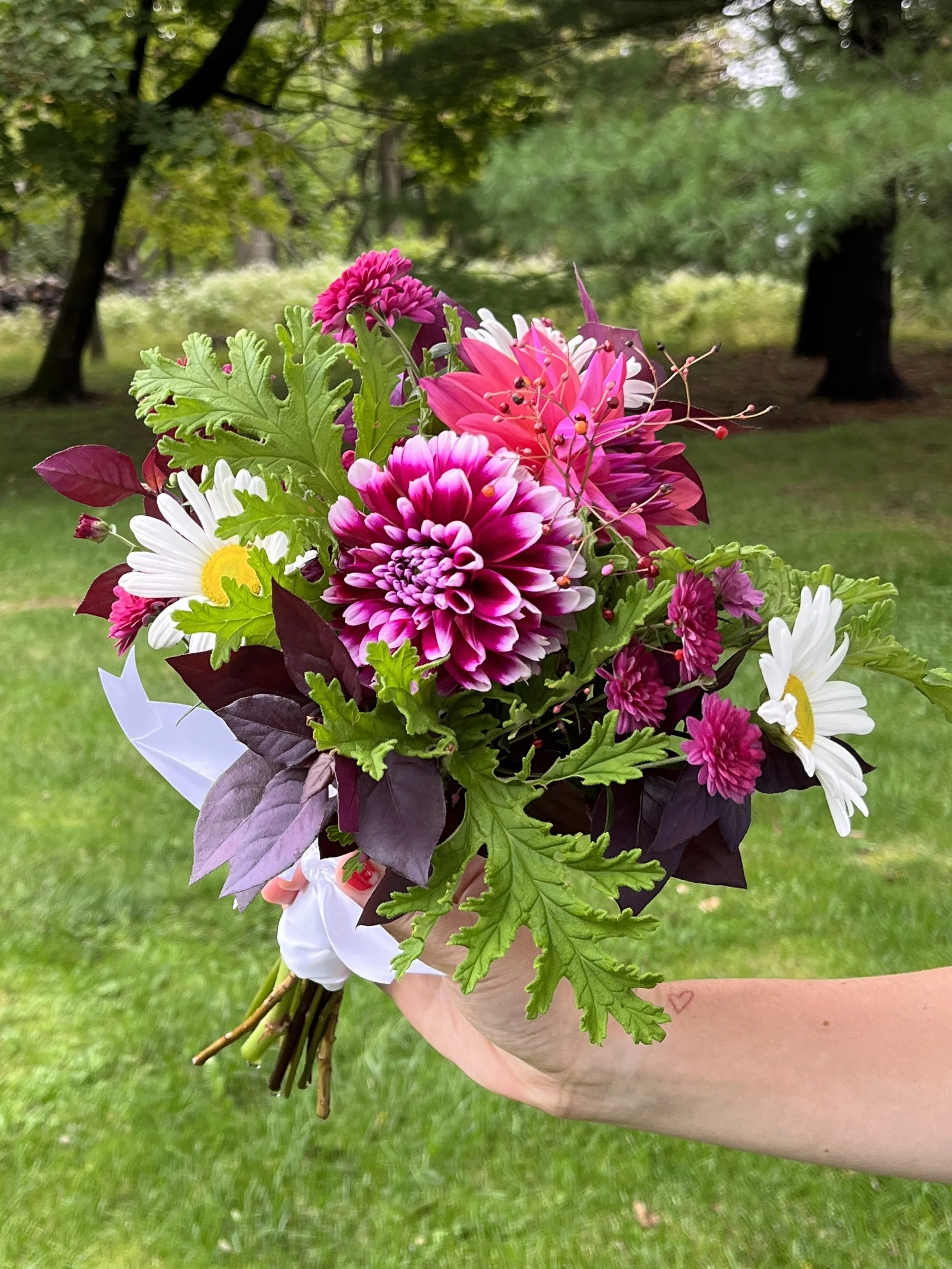
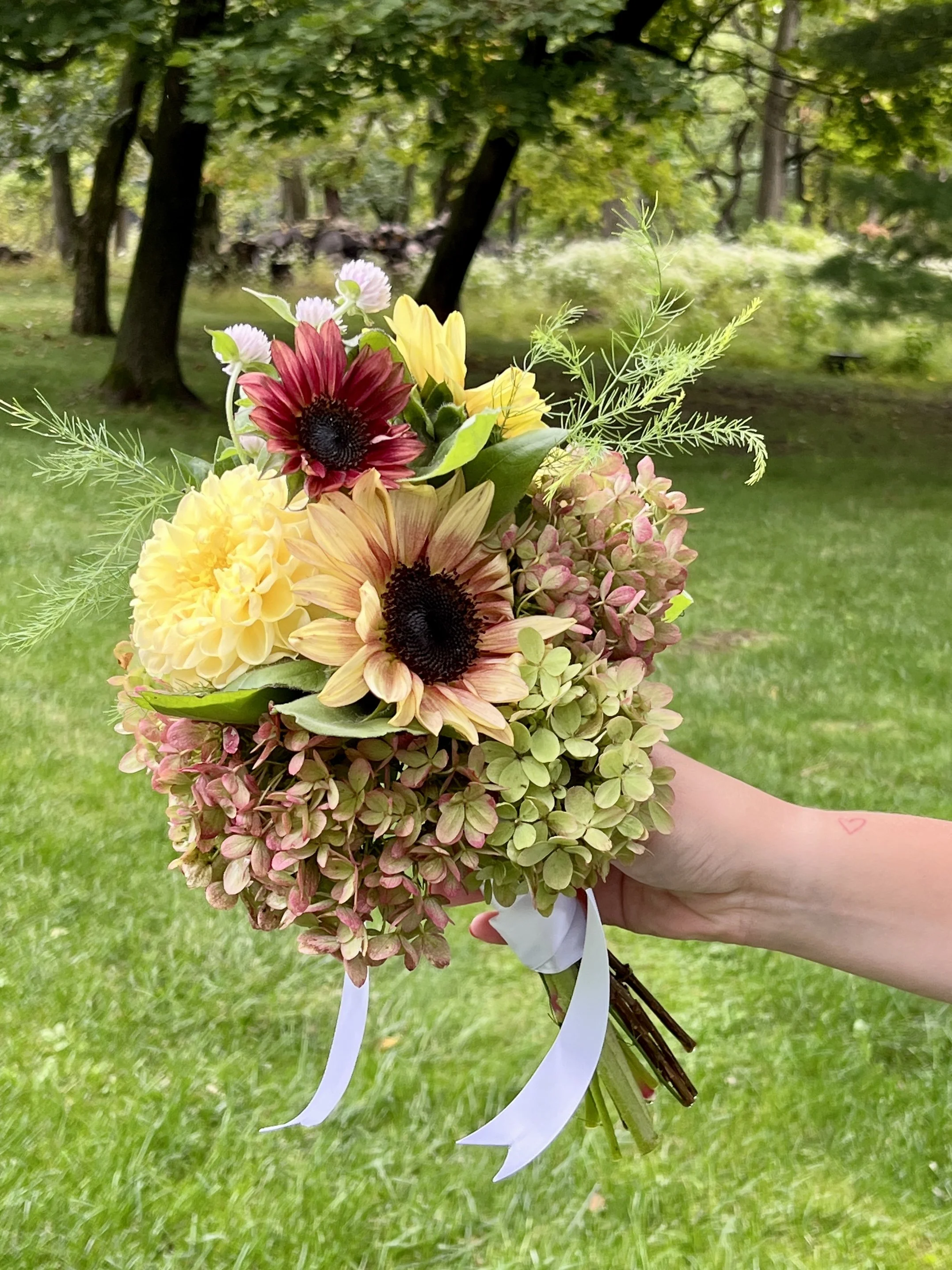
Over the years at Studio Sprig, I've created a handful of Homecoming floral bouquets. Not nearly as many as the prom bouquets I've made, but enough to remind me just how special these little arrangements can be.
Homecoming flowers don't have to be elaborate, but I think they should still be memorable. Personally, and because there is such a gorgeous abundance, I like to create stunning combinations of flowers, herbs and greenery for my homecoming bouquets.
Because They'll Remember the Flowers
Someday, your daughter may not remember exactly what she wore to Homecoming.
She may not remember which song played first at the dance or who won the football game.
But she might remember how it felt to get ready.
Her friends arriving at the door.
The photo op in her best friend’s backyard.
The excitement in the car on the way to the game.
The flowers someone handed her.
And you standing there, taking one more photograph before she went on her way.
That's the beautiful thing about traditions: they don't have to remain the same to remain meaningful.
Sometimes, all they need is a few flowers—and someone who understands how special the moment is.