
How to Preserve Flowers for Creative Projects

Dried flower & Dried Lime Grapevine Wreath. This wreath features some Wooden Flowers.
After designing and creating something special with flowers, I always hate to see them wither and eventually fade away. Recently, I began preserving the flowers I love so I can enjoy and use them again in future creative projects. This year, I’ve been experimenting with one of my favorites—the beloved dahlia—and the results have been wonderful.
I’ve even been known to disassemble a special bouquet and transform its individual flowers into a small everlasting wreath, creating a meaningful keepsake that helps commemorate a beautiful occasion.
Preserving flowers this way gives them a second life, turning something fleeting into a lasting piece of art.
Different Methods for Drying and Preserving Flowers
There are several simple ways to dry and preserve flowers, and the best method often depends on the type of flower. When I have abundant, sturdy stems like lavender, I typically use the traditional method of hanging small bunches upside down to air dry.
For flowers such as hydrangeas and tiny spray roses, I’ve found that an even easier method works beautifully: simply place them in a vase without water and let them dry naturally. As they lose their moisture, many flowers take on a wonderfully sculptural quality, creating a beautiful piece of dried-flower art with almost no effort at all.
Experimenting with different flower-preservation methods is part of the fun. With a little patience, flowers that might otherwise be discarded can become lasting materials for wreaths, arrangements, crafts, and other creative projects.
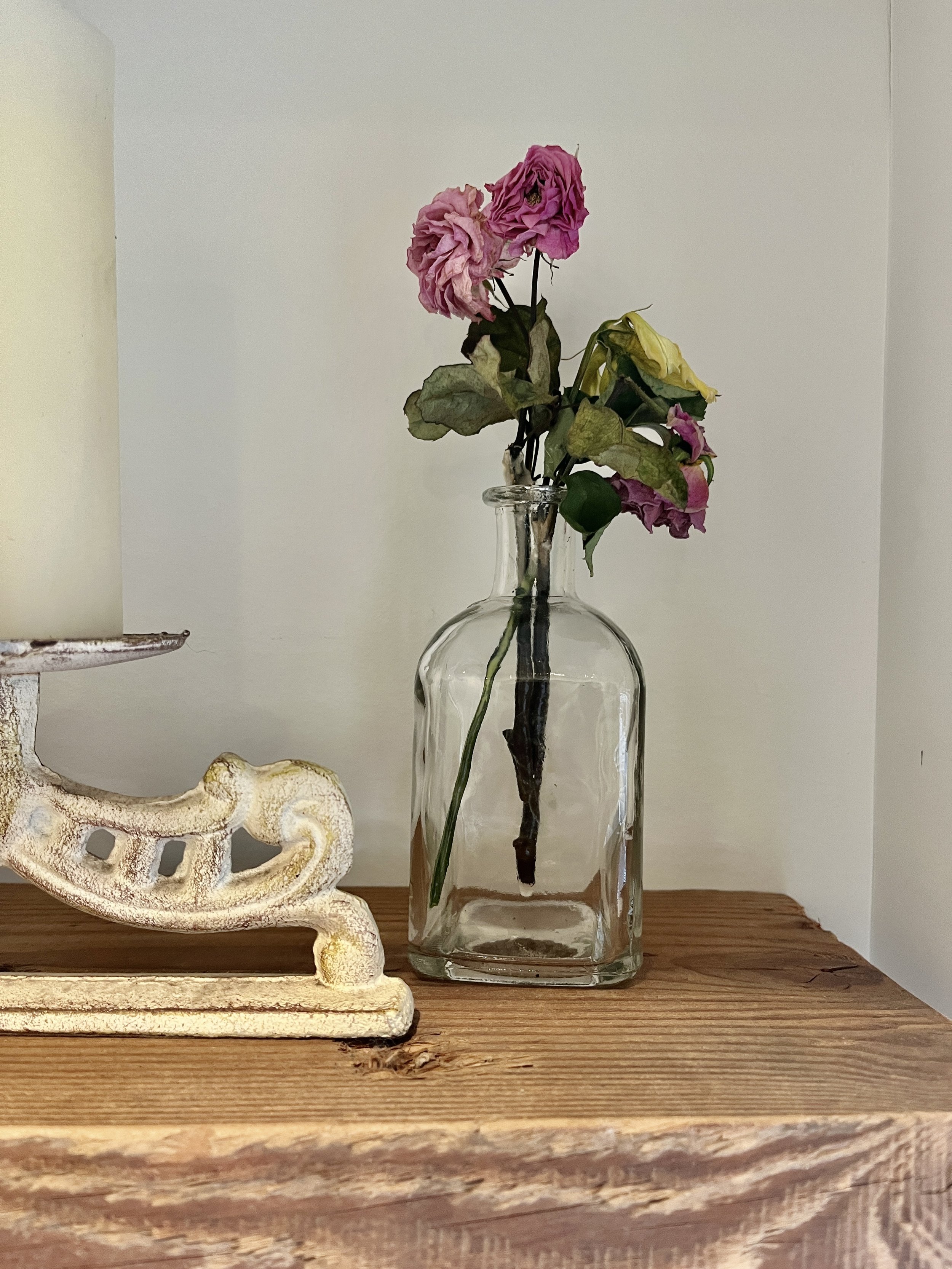
Dried spray roses in simple vase.
How to Preserve Flowers with Silica Gel Crystals
One of my favorite methods for preserving flowers is drying them with silica gel crystals. Silica gel gently draws moisture from the flowers, helping them retain much of their original shape, color, and delicate details. It’s an especially effective method for preserving flowers for wreaths, floral arrangements, crafts, and other creative projects.
I like to begin by removing any excess foliage and stems using my favorite Micro Pruning Snips. If you’re planning a project that requires the stems, you can certainly leave them intact.
Next, add about 1 inch of Silica Gel Crystals to the bottom of a Rubbermaid container, making sure the crystals create an even layer across the entire surface. Carefully place your flowers on top of the silica gel, either face up or face down, depending on the shape and type of flower. Arrange them closely together, but make sure the flowers aren’t touching one another.
Once all of your flowers are arranged, slowly pour more Silica Gel Crystals over the top. Continue adding crystals until each flower is completely covered and the silica gel has gently filled in around every petal and detail.
Secure the lid tightly and place the container in a cool, preferably dark location for approximately one week. The exact drying time will vary depending on the type and size of the flower. Some delicate flowers may be completely dry in just a few days, while larger, moisture-rich flowers can take longer.
The wonderful thing about drying flowers with silica gel is that you can experiment with different varieties and drying times to see what produces the best results. With a little trial and error, you’ll discover which flowers preserve beautifully—and you’ll have a wonderful supply of everlasting blooms ready for your next creative project.

Delicate dried Dahlia Flowres.
How to Remove and Store Flowers Preserved with Silica Gel
Once your flowers have finished drying, it’s time to carefully remove them from the silica gel. For this step, I recommend using a small slotted spatula, which makes it much easier to gently retrieve smaller, delicate flowers without damaging the petals.
I carefully slide the spatula underneath each flower and lift it slowly, allowing the Silica Gel Crystals to fall back into the container. Once the flower is removed, I gently tap it on all sides to release any crystals that may still be tucked between the petals.
I then arrange all of my newly preserved flowers side by side on a tray and allow them to sit for a little while longer, making sure they are completely dry before storing them. This extra step is important because any remaining moisture can lead to mold.
Once I’m confident the flowers are completely dry, I store them in a container with air vents to allow for some circulation. Properly dried and stored flowers can last for a long time, giving you a beautiful collection of everlasting blooms to use in wreaths, floral arrangements, crafts, and other creative projects.

Gently scooping dried Dahlia Flowers out of the Silica Gel Crystals.
Creative Ideas for Dried Flowers
Once you’ve preserved a beautiful collection of flowers, the fun really begins! There are so many creative things to make with dried flowers, from everlasting wreaths and floral branches to small decorative pieces that can be used as table cards, place settings, or gift toppers.
I especially love turning little pieces of wood into unique dried flower decorations. They make charming table cards or thoughtful gift toppers and are a wonderful way to give preserved flowers a second life. Another favorite in autumn are dried flower pumpkins. Hot gluing your dried bounty to the top of a pumpkin is simple and it makes a great centerpiece.
Or, you can keep it wonderfully simple. I often arrange small groupings of dried flowers in a pretty vase and let their natural beauty speak for itself. Unlike fresh flowers, dried floral arrangements can be enjoyed for months or even years, making them a lovely way to preserve a special moment, bouquet, or season.
If you’re planning to make dried flower wreaths, floral decorations, or gift toppers, I highly recommend investing in a quality glue gun. Because I do quite a bit of designing, I purchased a professional-grade, cordless Ryobi Glue Gun, and I absolutely love it. It gets very hot, so be careful when working with it, but not having a cord to maneuver around makes creating so much easier. The battery and charger are included, too.
With a collection of preserved blooms and a few simple supplies, you can turn dried flowers into beautiful, lasting pieces for your home, entertaining, gift wrapping, and creative projects.

Mini spray roses glued to a tiny piece of wood.
I hope this inspires you to start preserving all the beautiful flowers you encounter and turn them into something you can enjoy for years to come. I’d love to see what you create, so feel free to drop me a line and share your dried flower projects!
Your Supply list:
Hearty Fresh Flowers (without a lot of delicate & loose petals)
Micro-Tip Pruning Snips
Rubbermaid Storage Containers with Lids
Silica Gel Crystals
Mini Slotted Spatula
Professional-grade Glue Gun
Creating a Pressed Flower Frame

I really enjoy creating pressed flower frames, especially when I am making art from a beautiful bouquet.
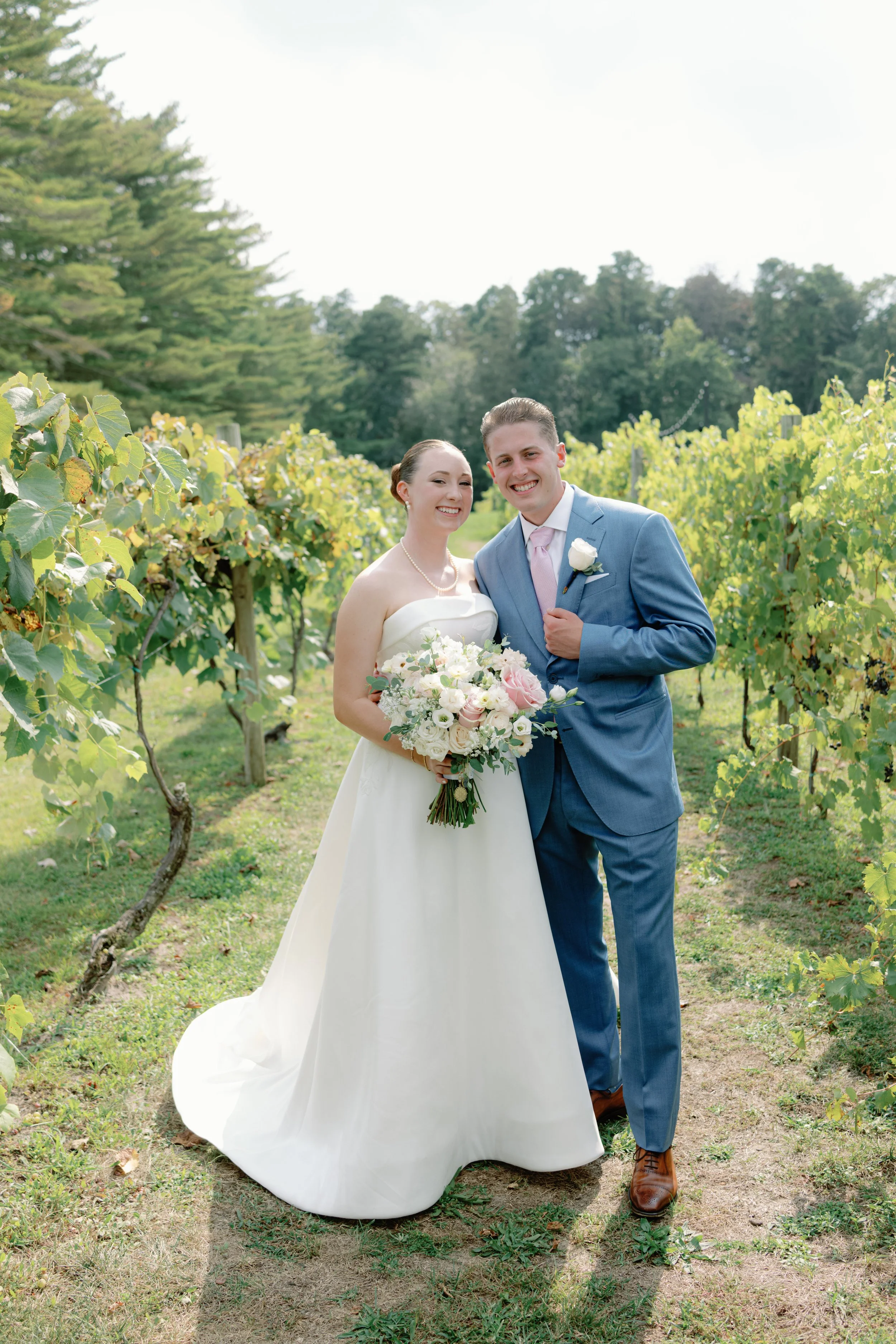
Start with Fresh flowers
Nothing beats a stunning bridal bouquet as a starting point, but it’s critically important to keep the bouquet as fresh as possible after the wedding. Plan to keep the bouquet in water and refrigerated, or at least in a cool, dark spot, until you are ready to press. I gathered this bouquet 2 days after the wedding and began pressing immediately.
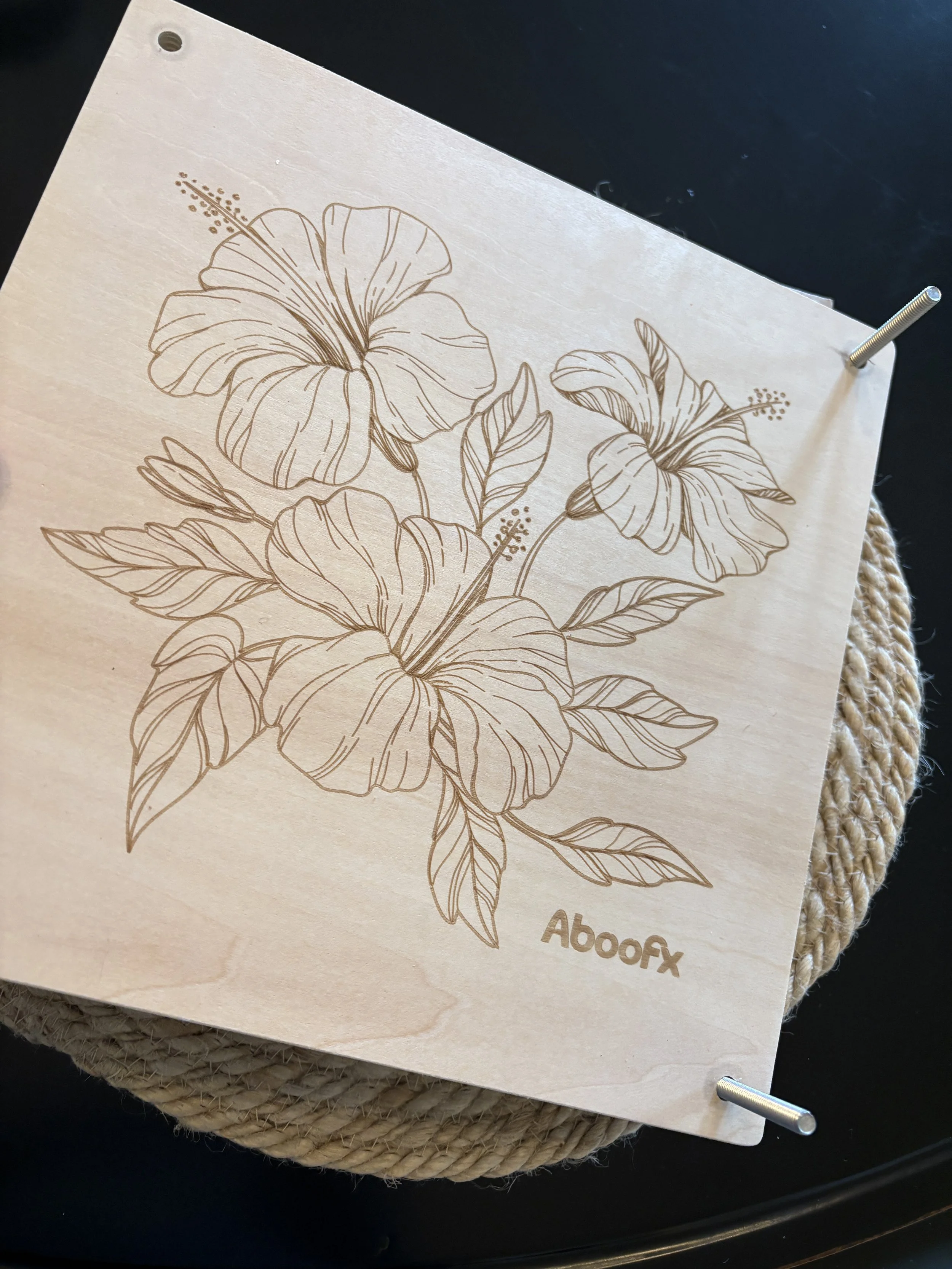
The Flower Press
I use this attractive wooden flower press from Aboofx. This wooden flower press not only looks appealing on a desk or counter, but it also comes with plenty of blotter paper, screws, and washers that allow me to easily apply ample pressing pressure. For a less expensive option, just buy loose sheets of Blotter Paper and press your flowers under several heavy books.

Press single Petals, Greens, and whole Flowers
Remember, it takes 4-6 weeks to press fresh flowers properly, but during that time, you can collect all the supplies you’ll need for your farmed art and rehearse the design you’d like to create.
Follow these steps when preparing the press:
Eliminate all moisture from petals and flowers (air drying is best while the flowers are still on the stem, but in water)
Cut off all thick stems as close to the flower as possible
Pull apart the petals from thick, round flowers like roses and press the petals individually
Take tiny cuttings from the greens and filler flowers like statice and baby’s breath
Separate leaves for pressing if you choose to include them in the final design
Use your best judgment when pressing small buds. If they seem too thick and full of moisture, do not try to press them

Layering the Blotter Sheets:
Lay each flower, green leaf or petal, individually, and try not to touch other pieces
When the blotter sheet is full, place another sheet on top and continue (be careful not to shift the sheets underneath)
When all of the flowers, greens, and petals are positioned, cover the stack with one final piece of blotter paper before placing the press’s wood cover or your pile of heavy books on top
Secure screws and washers, twist until tight, and the sheets cannot shift (only if using the flower press)
*Pro tip: If you are pressing WHITE flowers, place the entire press, including the books, into a refrigerator for the duration of the press. This will keep the white flowers white. But if you want an antiqued, tea-stained look, then keep them at room temperature.

Choose A Nice Frame
The frame choice is very important because you want the finished piece to hold up and look wonderful. I always choose floating frames with glass, not plastic, because I think they showcase the flowers well. You can decide between white, black, metal, or wood finishes, and of course, there are many sizes. This bouquet was large, and I wanted to represent all of the flowers, so I chose the Americanflat 11x14 Floating Frame in Oak with Polished Glass.
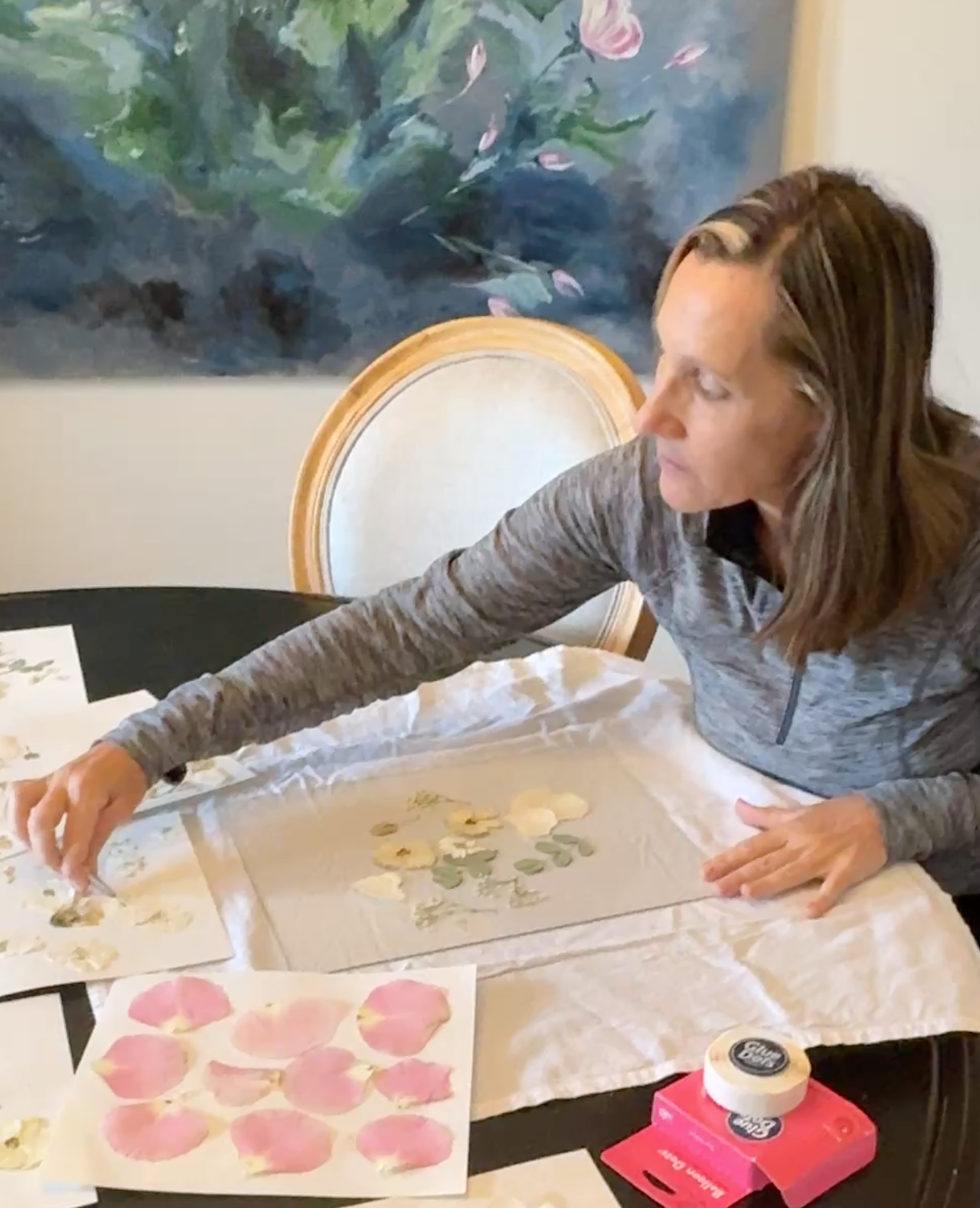
Designing the Flowers and Petals
This is the fun part. Only after 4-6 weeks have passed and your flowers have had enough time to dry and press, should you begin designing. Test each layer of your press to make sure everything is ready. I like to lay each sheet on my table so that I can clearly see everything before I begin arranging.
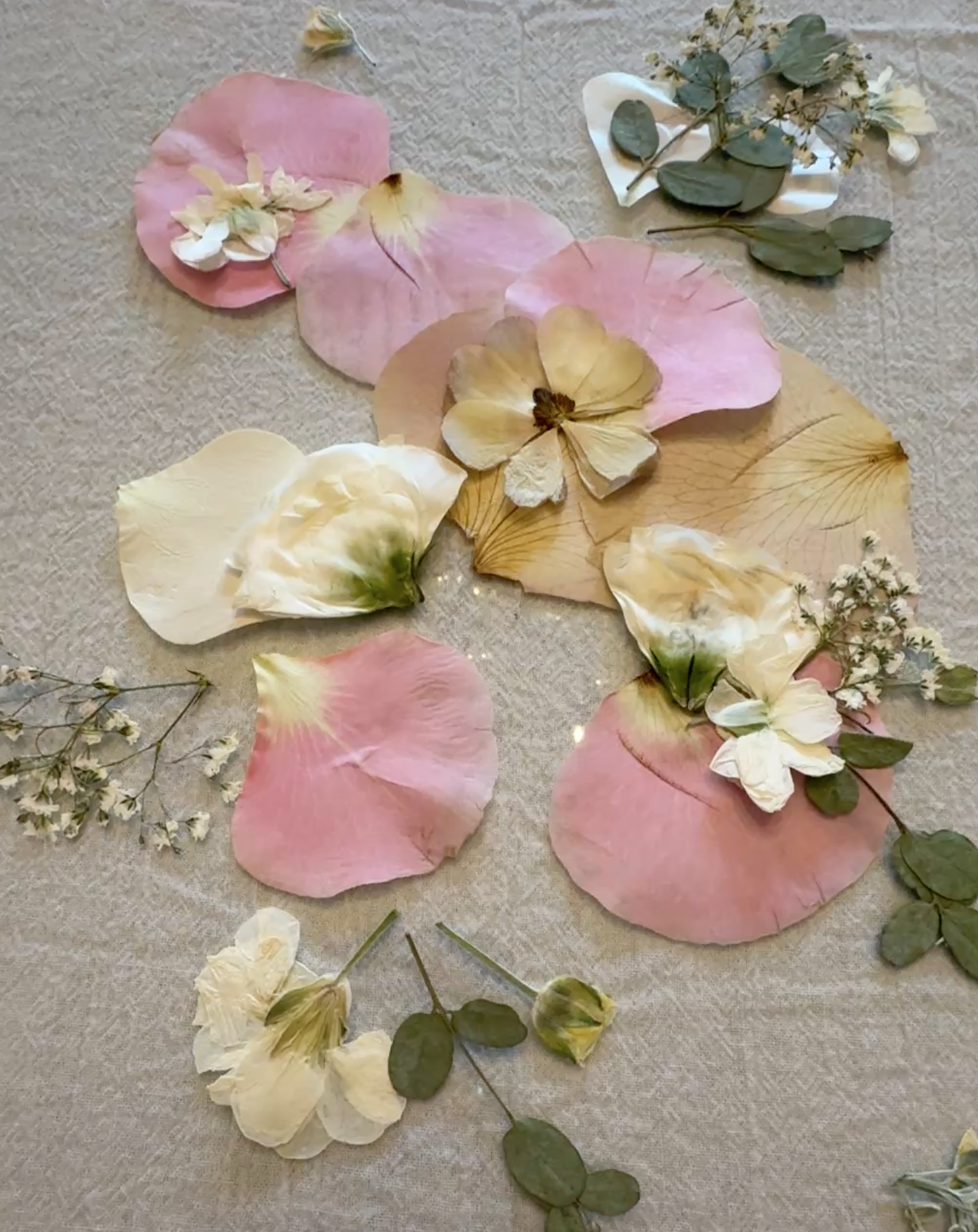
Lay out your design
To begin, place one piece of the frame’s glass onto a soft work surface. I used a plain, white dish towel so nothing could scratch the glass.
Start by laying out your preliminary design to get an overall sense of where you want to place each flower. I like to use a tweezer to carefully lift each petal or leaf, remembering that everything is very delicate at this stage and the petals tear easily. Sometimes I create using a lot of white space, allowing the flowers to breathe, while other times I like to bunch items together. Design is really personal preference.
Once you have your vision in place, carefully place small glue dots behind each flower or leaf and lightly press them into place. Some layering is aesthetic, but be sure not to create too many layers; otherwise, your double-layered glass will not slide into the frame.
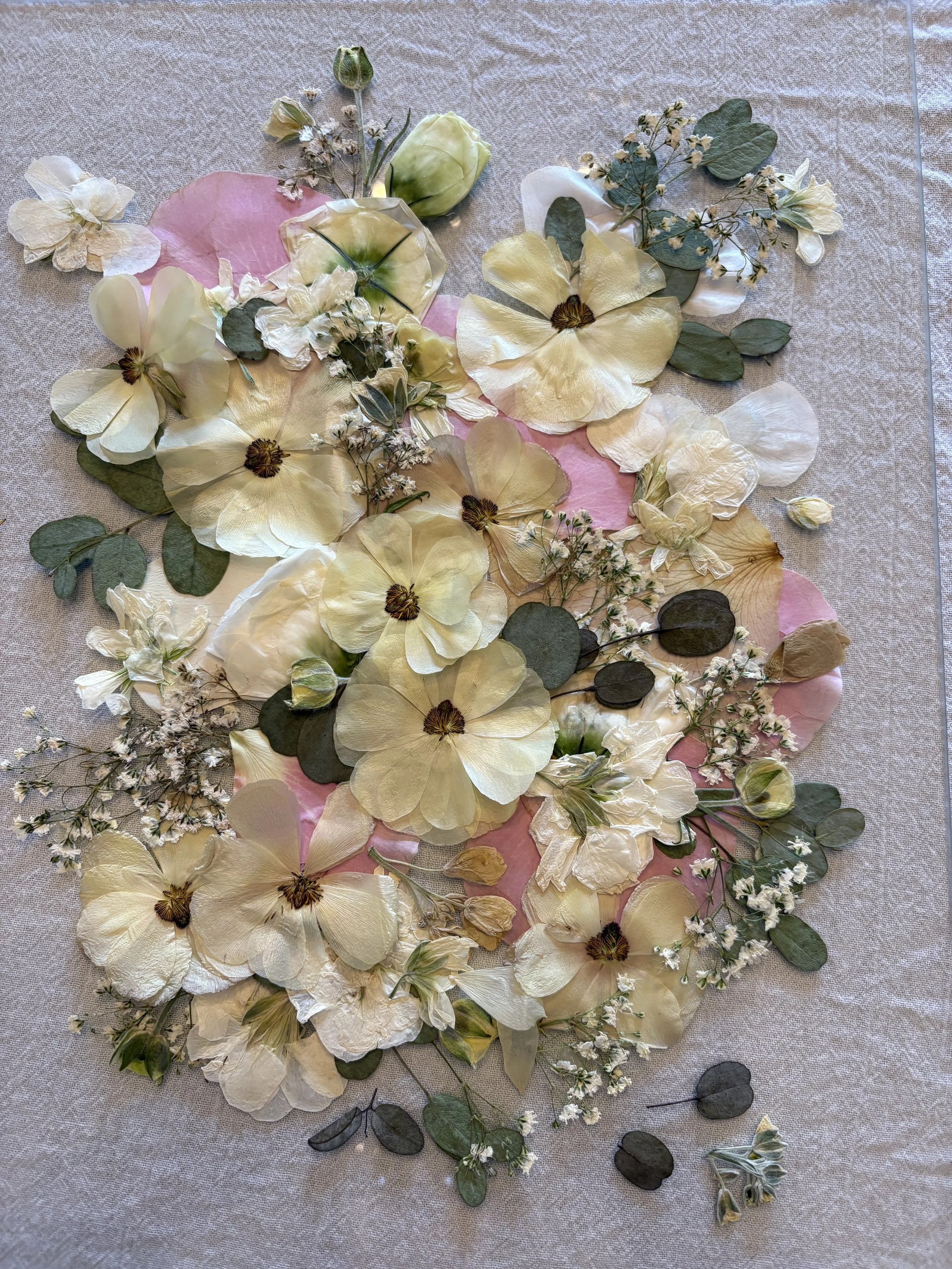
Assemble the Frame
When you are happy with your design, pick up the glass and make sure none of the pieces fall. If they do, just secure them with some more glue dots until everything stays in place. At this final stage, go over the entire design and make sure you do not see any glue from the front. If you do, place a small flower to cover it or remove the glue dot with your tweezers. Once everything is secure, slowly place the second piece of glass on top and assemble the frame.

I hope you enjoyed this blog
Have fun creating your pressed flower frames. Here is a short list of supplies you might like, including several unique press options for your convenience.
Hi, I’m Kim. Welcome to Studio Sprig.
Kim Bensing’s original watercolors and designs are now available on wallpaper and fabric. To order visit Studio Sprig’s design library on Spoonflower. Contact me if you need assistance.
-
EVENTS
22
- Oct 23, 2026 Wrapped in Wonder: The Art of Giving a Gift Oct 23, 2026
- Sep 26, 2026 Homecoming Flowers: A Beautiful Tradition Then and Now Sep 26, 2026
- Sep 23, 2026 Choose Wedding Flowers With Meaning: How to Create a Bouquet That Tells Your Love Story Sep 23, 2026
- Sep 21, 2026 The Pre-Prom Tradition Every Mom Should Try: Host a Backyard Bouquet Party Sep 21, 2026
- Sep 18, 2026 Lambertville’s Halloween Magic: A Funky, Creative Rivertown Comes Alive Sep 18, 2026
- Aug 20, 2026 How to Host a Beautiful Flower Bar: The Ultimate DIY Flower Bar Party Guide Aug 20, 2026
- Aug 19, 2026 How to Decorate Cakes with Fresh Flowers: Floral Wreaths, Crowns & More Aug 19, 2026
- Aug 19, 2026 Decorating Cakes with Fresh Flowers Aug 19, 2026
- May 18, 2025 How to Make DIY Bouquets for Prom May 18, 2025
- May 7, 2025 How to Preserve and Use Your Spring Flowers - All Year Long May 7, 2025
- Feb 27, 2025 Get Excited for The Flower Show Feb 27, 2025
- Feb 14, 2025 Historic Castles. What are they used for? Feb 14, 2025
- Jan 31, 2025 Creative Ideas For Your Valentine Jan 31, 2025
- Jan 28, 2025 How An Invitation Can Tell Your Love Story Jan 28, 2025
- Jan 23, 2025 How to Design a Valentine Tree Jan 23, 2025
- Jan 16, 2025 Host a Fabulous Bouquet Bar for Valentine's Day Jan 16, 2025
- Apr 4, 2023 Why Choose Seasonal Flowers for Your Special Occasion? Apr 4, 2023
- Feb 1, 2023 10 Ideas for an Eco-Friendly Event or Wedding Feb 1, 2023
- Nov 14, 2022 A Family Tree Inspired Wedding Invitation Nov 14, 2022
- Oct 3, 2022 How to choose flowers that have sentimental meaning Oct 3, 2022
- Nov 9, 2020 Simplified Wedding Ceremony during Covid Nov 9, 2020
- Apr 2, 2019 Why You Should Choose Seasonal Prom Flowers Apr 2, 2019
-
HOME
23
- Sep 9, 2026 How to Name a Farm: 10 Meaningful Ideas for Creating a Name With a Story Sep 9, 2026
- Sep 1, 2026 How to Preserve Flowers for Creative Projects Sep 1, 2026
- Jul 2, 2026 How to make your own flower confetti Jul 2, 2026
- Apr 22, 2025 How We Painted our Barn Apr 22, 2025
- Apr 16, 2025 What to Plant for Mesmerizing Spring Blooms Apr 16, 2025
- Apr 8, 2025 Narcissus AKA Daffodil - What's Blooming at Studio Sprig Apr 8, 2025
- Apr 1, 2025 Glory-of-the-Snow - What's Blooming at Studio Sprig Apr 1, 2025
- Mar 19, 2025 How we turned an Artist Studio into a Weekend Retreat Mar 19, 2025
- Mar 12, 2025 The Mighty Crocus - First to Bloom - What's Blooming at Studio Sprig Mar 12, 2025
- Jan 23, 2025 How to Design a Valentine Tree Jan 23, 2025
- Jan 16, 2025 Host a Fabulous Bouquet Bar for Valentine's Day Jan 16, 2025
- Jan 9, 2025 How to Make Your Own Mint Tea Jan 9, 2025
- Jan 7, 2025 How To Create A Courtyard Jan 7, 2025
- Jan 2, 2025 How to Create a Stunning Centerpiece Jan 2, 2025
- Mar 27, 2023 How We Transformed Our Farmhouse Kitchen by Reusing, Updating, and Thrifting: (Coffee Bar) Mar 27, 2023
- Mar 27, 2023 How We Transformed Our Farmhouse Kitchen by Reusing, Updating, and Thrifting Mar 27, 2023
- Mar 1, 2023 How and Why We Love Historic Homes Mar 1, 2023
- Jan 3, 2023 Eliminate Sneaky Sugars Jan 3, 2023
- Dec 14, 2022 How to Create a Pretty Mini Bar with Items You Already Own Dec 14, 2022
- Nov 21, 2022 Friendsgiving At Our Farm Nov 21, 2022
- Nov 9, 2022 Herbs: How to Grow, Harvest and Dry Your Own Nov 9, 2022
- Nov 9, 2022 DIY Herb Drying Rack: Herb Drying at Home Nov 9, 2022
- Oct 12, 2022 Have you ever thought about creating a beautiful water feature? Oct 12, 2022
-
STYLE
27
- Oct 6, 2026 Where Flowers Become Art, Experiences & Memories Oct 6, 2026
- Sep 1, 2026 How to Preserve Flowers for Creative Projects Sep 1, 2026
- Aug 20, 2026 How to Host a Beautiful Flower Bar: The Ultimate DIY Flower Bar Party Guide Aug 20, 2026
- Aug 19, 2026 How to Decorate Cakes with Fresh Flowers: Floral Wreaths, Crowns & More Aug 19, 2026
- Aug 19, 2026 Decorating Cakes with Fresh Flowers Aug 19, 2026
- Jul 2, 2026 How to make your own flower confetti Jul 2, 2026
- Nov 3, 2025 Creating a Pressed Flower Frame Nov 3, 2025
- May 7, 2025 How to Preserve and Use Your Spring Flowers - All Year Long May 7, 2025
- Jan 28, 2025 How An Invitation Can Tell Your Love Story Jan 28, 2025
- Jan 23, 2025 How to Design a Valentine Tree Jan 23, 2025
- Jan 6, 2025 How to Create Oyster Shell Necklaces Jan 6, 2025
- Jan 2, 2025 How to Create a Stunning Centerpiece Jan 2, 2025
- Mar 14, 2023 How to Make Sentimental Easter Eggs Mar 14, 2023
- Mar 6, 2023 How to Enjoy The PHS Philadelphia Flower Show Mar 6, 2023
- Feb 13, 2023 Let's Save The Bees Feb 13, 2023
- Feb 1, 2023 10 Ideas for an Eco-Friendly Event or Wedding Feb 1, 2023
- Jan 12, 2023 A Great Way to Help Kids with Cancer (PENN STATE) Jan 12, 2023
- Dec 14, 2022 How to Create a Pretty Mini Bar with Items You Already Own Dec 14, 2022
- Nov 29, 2022 Lunch and Dinner -Studio Sprig Style Micro Blog Nov 29, 2022
- Nov 14, 2022 A Family Tree Inspired Wedding Invitation Nov 14, 2022
- Nov 9, 2022 DIY Herb Drying Rack: Herb Drying at Home Nov 9, 2022
- Oct 30, 2022 Lambertville, Nj , A Funky, Cool Rivertown You Must Visit on Halloween. Oct 30, 2022
- Oct 19, 2022 How to choose an interesting place to stay when you travel or go on vacation Oct 19, 2022
- Oct 12, 2022 Have you ever thought about creating a beautiful water feature? Oct 12, 2022
- Oct 3, 2022 How to choose flowers that have sentimental meaning Oct 3, 2022
- Feb 1, 2021 How to design marketing materials for your small business Feb 1, 2021
- Oct 29, 2020 Surprise the bride when you can't come to her wedding Oct 29, 2020