

Choosing a farm name can be one of the most personal parts of making a place your own. The best farm names often come from somewhere real—a family story, the land itself, a favorite memory, an old photograph, or even a beloved book. Here's how I found the perfect name for our historic Pennsylvania farmhouse—and how you can find a meaningful name for yours. A Treasured Storybook
Start With the Story Behind Your Farm
When we decided to name our farm, I didn't want a name that simply sounded pretty. I wanted something that had meaning.
Our farmhouse is located in historic Bucks County, Pennsylvania, surrounded by old farms, stone houses, and beautiful countryside. We moved here in 2007, after our family outgrew our first historic home.
The house we found was a wonderful old clapboard farmhouse with a wrap-around porch, a barn, enormous trees, and plenty of history.
But as much as I loved the property, it didn't have a name.
So, naturally, I decided it needed one.

Front View Windy Hill Farm. Photo courtesy of Kim Bensing Design.
How Do You Choose a Farm Name?
If you're wondering how to name a farm, start by looking around you.
Before making a long list of clever farm names, look for the stories that already exist on your property.
Ask yourself:
What is the history of the land?
Who lived here before you?
Is there an interesting family name connected to the property?
What natural features surround the farm?
Is your farm on a hill, beside a creek, in a valley, or near a particular grove of trees?
Are there old barns, stone walls, gardens or outbuildings?
What animals, flowers or crops are special to the property?
Is there a favorite childhood memory associated with the land?
Are there old photographs, maps, letters or documents that might reveal something?
Is there a book, song or story that has a personal connection to your family?
Sometimes the best farm name ideas aren't invented at all. They're discovered.

Windy Hill’s wrap-around balcony is not original to the farmhouse. We think it was added sometime in the early 1980s. It’s very nice and provides a great place to catch 9 simultaneous fireworks shows on the 4th of July.
Look to the Land for Farm Name Ideas
The landscape itself can be a wonderful source of inspiration.
Think about words that describe your property:
Hill • Hollow • Meadow • Grove • Creek • Brook • Orchard • Field • Valley • Ridge • Woods • Garden • Acres • Farm
You can combine these with something personal.
For example:
Willow Hill Farm
Fox Hollow Farm
Meadow Grove
Old Oak Farm
Windy Hill Farm
Rose Hill
Bluebird Farm
Orchard House
A good farm name doesn't necessarily need to explain everything about the property. Sometimes one evocative word is enough to create a feeling.

Snow covered little Cottage at Windy Hill Farm. Photo courtesy of Kim Bensing Design.
Look Into Your Farm's History
If you own an older property, spend some time investigating its past before choosing a name.
Old deeds, maps, photographs, newspapers and family records can reveal fascinating clues.
And don't overlook your neighbors.
Someone who has lived in the area for decades may know something about your property that you could never find online.
That's exactly what happened to us.

Walpole Lamppost and sign created by McElHaney Signs here in town.
The Story Behind Windy Hill Farm
For years, I had owned a little vintage children's storybook called The Ghost of Windy Hill.
It was one of my favorite weekly readers as a child, and somehow that little book stayed on my bookshelf throughout my entire life.
The book was written in 1966—the same year I was born—and the story takes place in 1851, around the same era our farmhouse was built.
I had never imagined that the book would eventually inspire the name of our home.
But then we discovered something about the property.
Our farmhouse sits at the top of a ridge, surrounded by enormous old trees. The wind moves through the property constantly, whistling through the original windows and across the hill.
When it gets windy here, it gets really windy.
Suddenly, the name seemed obvious.

Windy Hill’s side view with a big old tree. Photo courtesy of Kim Bensing Design
Windy Hill.
The old storybook gave the name a personal history, while the land itself gave it meaning.
And just like that, our farm had a name.

View of Windy Hill’s Barn behind a lilac. Photo courtesy of John Arehart Photography.
Sometimes the History Finds You
After we named the property Windy Hill, something unexpected began happening.
People started stopping by.
Over the years, approximately twenty people have told us that they had once lived in the house, visited the property or spent time in the old barn.
Then one summer day, an older woman named Dee and her daughter stopped by.
Dee told us that she and her cousin had spent summers here during the 1930s. The farm had belonged to their aunt and uncle, and the property held some of her favorite childhood memories.
A week later, Dee returned with her cousin.
They brought old photographs.
They showed us pictures of the property from decades earlier and even brought a hand-drawn floor plan of the house.
As we walked through the rooms together, they remembered where old doorways had been and explained why certain parts of the house seemed unusual.
Then Dee's cousin stopped before what is now our dining room.
He said there had once been a large hole in the floor for the heat.
We had always known there was something unusual about the floorboards, but we had never understood why.
Sure enough, there was a covered opening exactly where he remembered it.
It was one of those moments when a house stops being simply a house.
It becomes a story.

Dee, her daughter, her cousin, Kim & Mike Bensing.
Meaningful Farm Names Often Come From the Past
That experience changed the way I think about naming a property.
A farm name doesn't have to be clever.
It doesn't have to follow a trend.
And it doesn't have to be something you come up with in one afternoon.
The most memorable farm names with meaning often connect the present to the past.
Your perfect name might be hiding in:
An old family photograph
A childhood book
The name of a former owner
A nearby landmark
A favorite tree
A creek or hill
An old field name
A family tradition
A local legend
The history of the property
A meaningful event that happened there

How to Choose the Right Farm Name
Once you've gathered your ideas, make a short list.
Then say each name out loud.
Does it feel natural?
Is it easy to remember?
Can people spell it?
Will it still make sense if your farm changes or grows?
And most importantly:
Does the name mean something to you?
A good farm name should feel like it belongs to the land.
You don't necessarily need the most unique name. You need the name that feels right.

Dining Room Floorboards at Windy Hill Farm.
Give Your Farm a Name That Can Become Part of Its History
After choosing Windy Hill, we installed a beautiful lamppost and sign at the entrance to the property.
That little sign became more than decoration.
It gave our home an identity.
Over the years, it has become part of the story of this place—and now, whenever someone asks where we live, I can simply say:
Windy Hill.
And somehow, that says so much more than an address ever could.
If you're trying to name your own farm, farmhouse, homestead or historic property, look for the story before you look for the name.
You may discover that the perfect name has been there all along.

Historic Images of Windy Hill Farm circa 1930s.
More Studio Sprig Inspiration
If you love historic homes, gardens, flowers and the stories behind beautiful places, explore more of Studio Sprig's floral art, surface patterns and inspiration from Windy Hill Farm.
And if your property has a story of its own, I'd love to hear it.
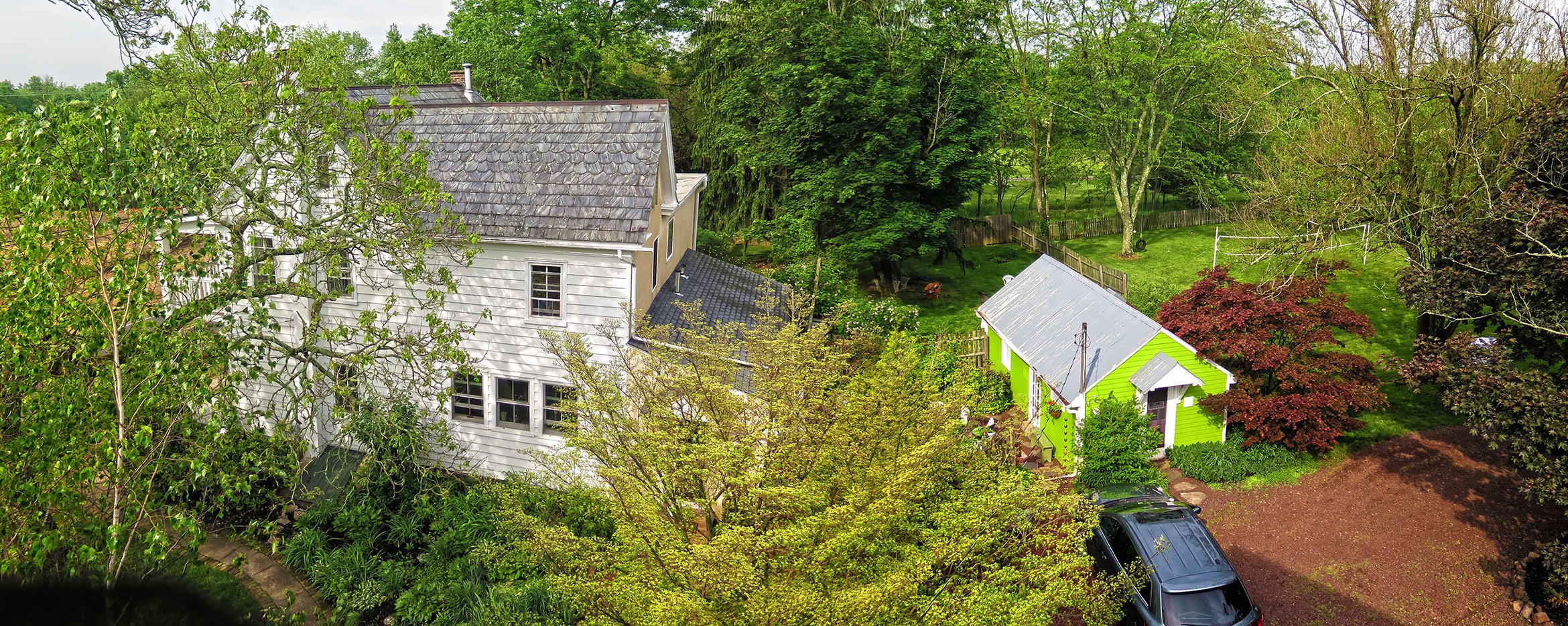
View of Property from the Barn. Photo courtesy of John Arehart Photography.