

How to Name a Farm: 10 Meaningful Ideas for Creating a Name With a Story
How to Name A Farm -how we named our farm in Bucks County Pennsylvania, Windy Hill Farm after the book The Ghost of Windy Hill.
Choosing a farm name can be one of the most personal parts of making a place your own. The best farm names often come from somewhere real—a family story, the land itself, a favorite memory, an old photograph, or even a beloved book. Here's how I found the perfect name for our historic Pennsylvania farmhouse—and how you can find a meaningful name for yours. A Treasured Storybook
Start With the Story Behind Your Farm
When we decided to name our farm, I didn't want a name that simply sounded pretty. I wanted something that had meaning.
Our farmhouse is located in historic Bucks County, Pennsylvania, surrounded by old farms, stone houses, and beautiful countryside. We moved here in 2007, after our family outgrew our first historic home.
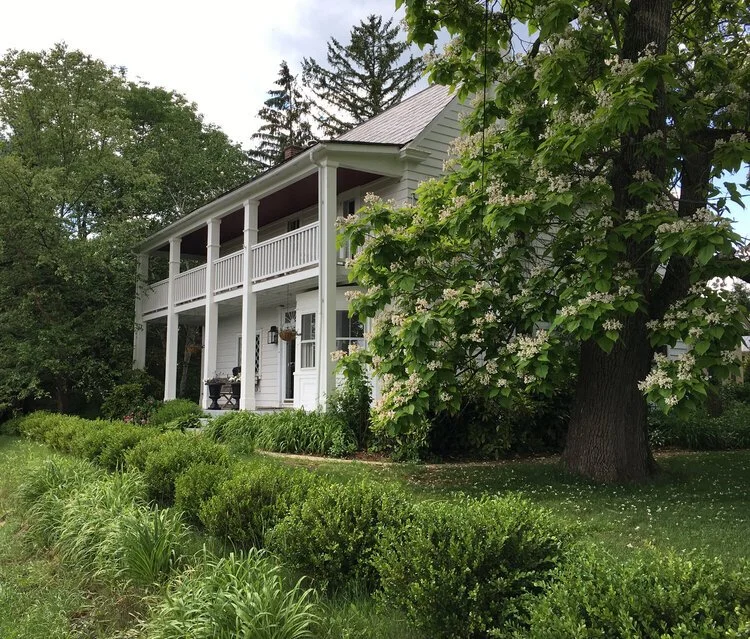
The house we found was a wonderful old clapboard farmhouse with a wrap-around porch, a barn, enormous trees, and plenty of history.
But as much as I loved the property, it didn't have a name.
So, naturally, I decided it needed one.

Front View Windy Hill Farm. Photo courtesy of Kim Bensing Design.
How Do You Choose a Farm Name?
If you're wondering how to name a farm, start by looking around you.
Before making a long list of clever farm names, look for the stories that already exist on your property.
Ask yourself:
What is the history of the land?
Who lived here before you?
Is there an interesting family name connected to the property?
What natural features surround the farm?
Is your farm on a hill, beside a creek, in a valley, or near a particular grove of trees?
Are there old barns, stone walls, gardens or outbuildings?
What animals, flowers or crops are special to the property?
Is there a favorite childhood memory associated with the land?
Are there old photographs, maps, letters or documents that might reveal something?
Is there a book, song or story that has a personal connection to your family?
Sometimes the best farm name ideas aren't invented at all. They're discovered.

Windy Hill’s wrap-around balcony is not original to the farmhouse. We think it was added sometime in the early 1980s. It’s very nice and provides a great place to catch 9 simultaneous fireworks shows on the 4th of July.
Look to the Land for Farm Name Ideas
The landscape itself can be a wonderful source of inspiration.
Think about words that describe your property:
Hill • Hollow • Meadow • Grove • Creek • Brook • Orchard • Field • Valley • Ridge • Woods • Garden • Acres • Farm
You can combine these with something personal.
For example:
Willow Hill Farm
Fox Hollow Farm
Meadow Grove
Old Oak Farm
Windy Hill Farm
Rose Hill
Bluebird Farm
Orchard House
A good farm name doesn't necessarily need to explain everything about the property. Sometimes one evocative word is enough to create a feeling.

Snow covered little Cottage at Windy Hill Farm. Photo courtesy of Kim Bensing Design.
Look Into Your Farm's History
If you own an older property, spend some time investigating its past before choosing a name.
Old deeds, maps, photographs, newspapers and family records can reveal fascinating clues.
And don't overlook your neighbors.
Someone who has lived in the area for decades may know something about your property that you could never find online.
That's exactly what happened to us.

Walpole Lamppost and sign created by McElHaney Signs here in town.
The Story Behind Windy Hill Farm
For years, I had owned a little vintage children's storybook called The Ghost of Windy Hill.
It was one of my favorite weekly readers as a child, and somehow that little book stayed on my bookshelf throughout my entire life.
The book was written in 1966—the same year I was born—and the story takes place in 1851, around the same era our farmhouse was built.
I had never imagined that the book would eventually inspire the name of our home.
But then we discovered something about the property.
Our farmhouse sits at the top of a ridge, surrounded by enormous old trees. The wind moves through the property constantly, whistling through the original windows and across the hill.
When it gets windy here, it gets really windy.
Suddenly, the name seemed obvious.

Windy Hill’s side view with a big old tree. Photo courtesy of Kim Bensing Design
Windy Hill.
The old storybook gave the name a personal history, while the land itself gave it meaning.
And just like that, our farm had a name.

View of Windy Hill’s Barn behind a lilac. Photo courtesy of John Arehart Photography.
Sometimes the History Finds You
After we named the property Windy Hill, something unexpected began happening.
People started stopping by.
Over the years, approximately twenty people have told us that they had once lived in the house, visited the property or spent time in the old barn.
Then one summer day, an older woman named Dee and her daughter stopped by.
Dee told us that she and her cousin had spent summers here during the 1930s. The farm had belonged to their aunt and uncle, and the property held some of her favorite childhood memories.
A week later, Dee returned with her cousin.
They brought old photographs.
They showed us pictures of the property from decades earlier and even brought a hand-drawn floor plan of the house.
As we walked through the rooms together, they remembered where old doorways had been and explained why certain parts of the house seemed unusual.
Then Dee's cousin stopped before what is now our dining room.
He said there had once been a large hole in the floor for the heat.
We had always known there was something unusual about the floorboards, but we had never understood why.
Sure enough, there was a covered opening exactly where he remembered it.
It was one of those moments when a house stops being simply a house.
It becomes a story.

Dee, her daughter, her cousin, Kim & Mike Bensing.
Meaningful Farm Names Often Come From the Past
That experience changed the way I think about naming a property.
A farm name doesn't have to be clever.
It doesn't have to follow a trend.
And it doesn't have to be something you come up with in one afternoon.
The most memorable farm names with meaning often connect the present to the past.
Your perfect name might be hiding in:
An old family photograph
A childhood book
The name of a former owner
A nearby landmark
A favorite tree
A creek or hill
An old field name
A family tradition
A local legend
The history of the property
A meaningful event that happened there

How to Choose the Right Farm Name
Once you've gathered your ideas, make a short list.
Then say each name out loud.
Does it feel natural?
Is it easy to remember?
Can people spell it?
Will it still make sense if your farm changes or grows?
And most importantly:
Does the name mean something to you?
A good farm name should feel like it belongs to the land.
You don't necessarily need the most unique name. You need the name that feels right.

Dining Room Floorboards at Windy Hill Farm.
Give Your Farm a Name That Can Become Part of Its History
After choosing Windy Hill, we installed a beautiful lamppost and sign at the entrance to the property.
That little sign became more than decoration.
It gave our home an identity.
Over the years, it has become part of the story of this place—and now, whenever someone asks where we live, I can simply say:
Windy Hill.
And somehow, that says so much more than an address ever could.
If you're trying to name your own farm, farmhouse, homestead or historic property, look for the story before you look for the name.
You may discover that the perfect name has been there all along.

Historic Images of Windy Hill Farm circa 1930s.
More Studio Sprig Inspiration
If you love historic homes, gardens, flowers and the stories behind beautiful places, explore more of Studio Sprig's floral art, surface patterns and inspiration from Windy Hill Farm.
And if your property has a story of its own, I'd love to hear it.
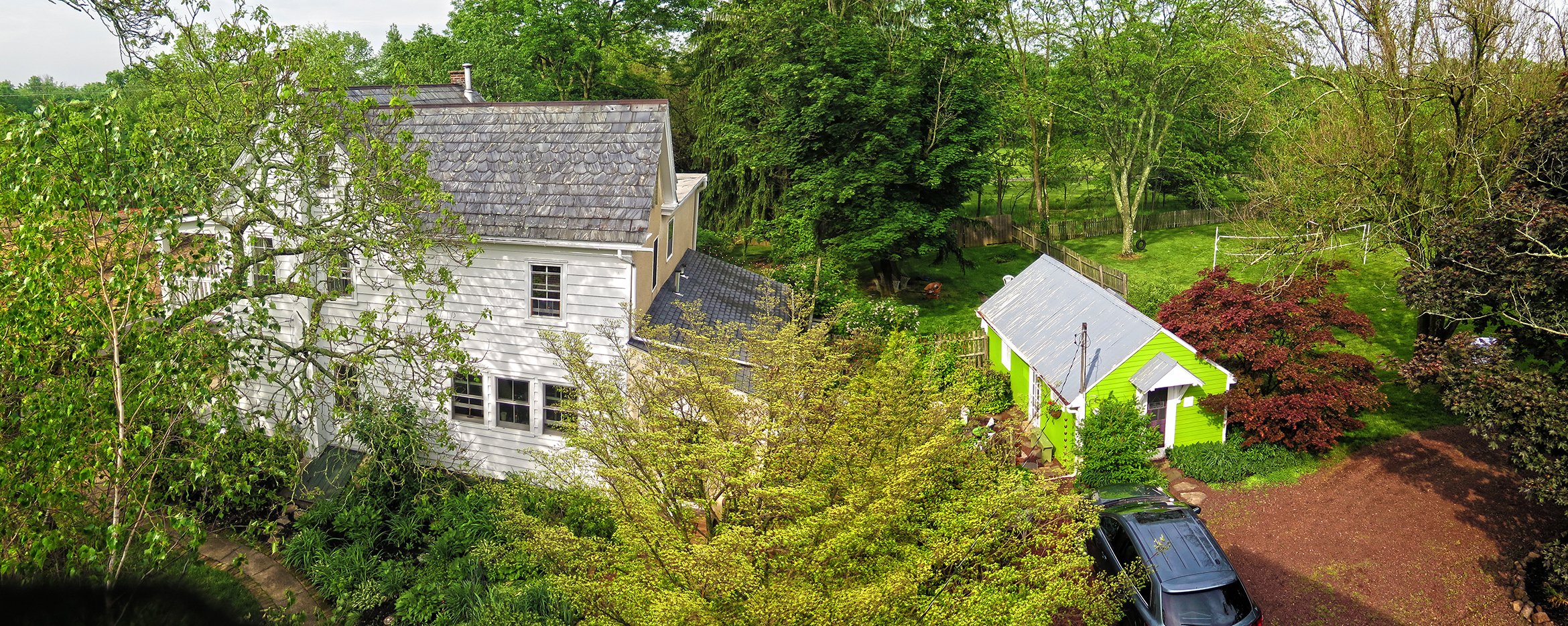
View of Property from the Barn. Photo courtesy of John Arehart Photography.
How and Why We Love Historic Homes
The first home we bought when we moved to this area was this 18th-century Stone Colonial. It was so unique, very well maintained, and quintessentially Early American.

A Little History
One of the things we love about this area of the country, Bucks County, Pennsylvania, is the availability of historic homes and properties. Bucks County boasts 12 original covered bridges and there are gorgeous barns and farms all over the place.
The first home we bought when we moved to this area was this 18th-century Stone Colonial. It was so unique, very well maintained, and quintessentially Early American. It had very uneven measurements, only 2 full bedrooms, and a little walk-through space off the master (which we quickly crafted into a nursery), a woodburning stove, a classic pie staircase, beautiful deep windowsills, a nice brick courtyard with a farm bell and climbing roses, a garden-filled yard, and a sweet little cottage (which became my studio).

Side view of stone colonial home.
Why our homes are sentimental
We lived in this home from 1998-2007 and it was our first so of course, it’s sentimental. Our young family loved and used every square inch of it because it was not very big. It was built from beautiful fieldstone and because it was well taken care of previously it did not require a lot of work or renovation which was perfect for that time of our lives. The only problem was that the home became a little too small for our growing family over time and it also sat on a busy road. This position near the road made sense when it was built in 1780 because it was built on a main road leading straight to Philadelphia, but in 2007 it was no longer a workable feature with our three young children, so we decided we needed to find something a little different. Not an easy decision as we had grown to love this little beauty.

Farm bell with climbing roses and two dancing queens.

Our family portrait in front of the Stone Colonial Home. Photo Courtesy: Catherine Byvelds
A Victorian Farmhouse up the hill
We searched for a new home for quite a while, always looking for another historic gem that we could easily call home. Eventually, we actually found a white Victorian Clapboard Farmhouse with 3 outbuildings that were literally up the hill (foreshadowing Windy Hill) from our original Stone Colonial. This worked out well because purchasing this Victorian would mean we wouldn't have to pull our children out of the primary school they were attending and could essentially stay connected to our neighborhood friends. It also had 4 massive bedrooms and a cottage apartment on the property so to us it seemed just like the Taj Mahal!!!

Windy Hill Farm in spring.
Learning about our home
Once we were certain this place was for us - but before the purchase, I made it my personal mission to befriend the current owner so that I could really get to know her, the house, and its history because I knew she had loved it for a very long time and that she felt the same way about historic properties. She told me she was searching for the perfect family to love her home. If you haven’t picked this up already, what you must know about owners of historic properties is that they are obsessed. They may be obsessed with history, architecture, farming, antiques, or ghosts, but trust me, they are in love with something like that and that is why they are drawn to care for a piece of history in the first place.

Windy Hill Farm in winter.
research with tea
So, because I am one of the obsessive types, I set up “tea dates” with the lovely woman who had owned this home for over 30 years so we could discuss all the little nuances that are so important to understand when buying an older home. She graciously filled me in on details about the gardens and the herds of yard deer (yes, that’s a thing), the neighbors, the well and water pipes, the paint colors she used and why she used them, the utility schedules, the septic system, and important details about the rental income the farm provided and how and why it would be in our best interest to keep that going.

Kids greet from the balcony.
how Rental Income sealed the deal
When purchasing a historic farm, don't underestimate the power of passive rental income. One of the reasons we chose this farm was because it came with established rental income derived from an outbuilding at the back of the property. The large outbuilding had been previously renovated and divided into 4 distinct storage-only garages: one to be used by the owner as a garage for the lawn mower, bikes, tools, and such, and the other 3 to be used for a home business or rented out if desired. There is a private driveway to this building and all access is in the back, so tenants never have to disturb the family in the main house.

Out building provides rental income.
Plant, don’t demolish
Full disclosure, at first I just wanted to demolish the building completely (I was strongly “persuaded” to plant pine trees instead) but today I’m glad we didn't demolish after all because, over the last 16 years, the building has provided a very nice passive income which took care of half of our monthly mortgage, and it has allowed us to do the many renovations and updates we've wanted to do on the original farmhouse and cottage. It also paid for exciting family vacations, and currently, it's helping to pay 3 simultaneous college tuitions. I now have more of an open mind and if you are searching for a historic property, I recommend finding a way to generate some passive income.

Kids planting first pines which will help to pay for their college!
Creative home inspirations
When we moved into the Victorian Farmhouse in the summer of 2007 we were very content with the state of the home. It had great bones, lovely updates, and many classic features. There is a main farmhouse, a big, green 4-story bank barn, a little studio cottage (perfect for my designing), and that long outbuilding above that we soon rented out. Bonus! Sure, this home would eventually need some updates, but we had three kids to raise, a lot of time, and much more energy then, so we were not in a hurry. Nevertheless, creative renovations did eventually happen everywhere (and sometimes twice) so sign up to receive alerts about the entire project and the way we did "creative home inspirations" here at Windy Hill. Below is a sampling of what is to come. If you enjoy this blog please comment below and share it with your friends. And you can subscribe here. Thank you, Kim

Side view of Windy Hill Farm.
Creative Home Inspirations….Sign up so you don’t miss them!
A Cute Courtyard & A Scary Tree
Weedy, Old Heirloom Gardens
The Cottage Becomes a Studio
A Yard Sale-Inspired Kitchen
A Wisteria-Covered Outdoor Entertainment Space
Our Peek-a-Boo Pantry
A Floral Workshop
An inviting Mudroom
The Under-the-Stair Secret Hideaway
A Lite & Bright Family Room
An Arhaus-Inspired Dining Room
A Fun & Foral Laundry Room
Our Simple and Fresh Bathrooms
The Transformable Bedrooms (Kid-to-Teen)
A Classic Living Room, Game Room & Home Office
The Marriage Marked Bank Barn
Shop the look at Windy Hill Farm! If you’re a blogger, what’s your favorite SEO Tool? I’ve had much keyword success with RankIQ. Learn more here.
Hi, I’m Kim. Welcome to Studio Sprig.
Kim Bensing’s original watercolors and designs are now available on wallpaper and fabric. To order visit Studio Sprig’s design library on Spoonflower. Contact me if you need assistance.
-
EVENTS
22
- Oct 23, 2026 Wrapped in Wonder: The Art of Giving a Gift Oct 23, 2026
- Sep 26, 2026 Homecoming Flowers: A Beautiful Tradition Then and Now Sep 26, 2026
- Sep 23, 2026 Choose Wedding Flowers With Meaning: How to Create a Bouquet That Tells Your Love Story Sep 23, 2026
- Sep 21, 2026 The Pre-Prom Tradition Every Mom Should Try: Host a Backyard Bouquet Party Sep 21, 2026
- Sep 18, 2026 Lambertville’s Halloween Magic: A Funky, Creative Rivertown Comes Alive Sep 18, 2026
- Aug 20, 2026 How to Host a Beautiful Flower Bar: The Ultimate DIY Flower Bar Party Guide Aug 20, 2026
- Aug 19, 2026 How to Decorate Cakes with Fresh Flowers: Floral Wreaths, Crowns & More Aug 19, 2026
- Aug 19, 2026 Decorating Cakes with Fresh Flowers Aug 19, 2026
- May 18, 2025 How to Make DIY Bouquets for Prom May 18, 2025
- May 7, 2025 How to Preserve and Use Your Spring Flowers - All Year Long May 7, 2025
- Feb 27, 2025 Get Excited for The Flower Show Feb 27, 2025
- Feb 14, 2025 Historic Castles. What are they used for? Feb 14, 2025
- Jan 31, 2025 Creative Ideas For Your Valentine Jan 31, 2025
- Jan 28, 2025 How An Invitation Can Tell Your Love Story Jan 28, 2025
- Jan 23, 2025 How to Design a Valentine Tree Jan 23, 2025
- Jan 16, 2025 Host a Fabulous Bouquet Bar for Valentine's Day Jan 16, 2025
- Apr 4, 2023 Why Choose Seasonal Flowers for Your Special Occasion? Apr 4, 2023
- Feb 1, 2023 10 Ideas for an Eco-Friendly Event or Wedding Feb 1, 2023
- Nov 14, 2022 A Family Tree Inspired Wedding Invitation Nov 14, 2022
- Oct 3, 2022 How to choose flowers that have sentimental meaning Oct 3, 2022
- Nov 9, 2020 Simplified Wedding Ceremony during Covid Nov 9, 2020
- Apr 2, 2019 Why You Should Choose Seasonal Prom Flowers Apr 2, 2019
-
HOME
23
- Sep 9, 2026 How to Name a Farm: 10 Meaningful Ideas for Creating a Name With a Story Sep 9, 2026
- Sep 1, 2026 How to Preserve Flowers for Creative Projects Sep 1, 2026
- Jul 2, 2026 How to make your own flower confetti Jul 2, 2026
- Apr 22, 2025 How We Painted our Barn Apr 22, 2025
- Apr 16, 2025 What to Plant for Mesmerizing Spring Blooms Apr 16, 2025
- Apr 8, 2025 Narcissus AKA Daffodil - What's Blooming at Studio Sprig Apr 8, 2025
- Apr 1, 2025 Glory-of-the-Snow - What's Blooming at Studio Sprig Apr 1, 2025
- Mar 19, 2025 How we turned an Artist Studio into a Weekend Retreat Mar 19, 2025
- Mar 12, 2025 The Mighty Crocus - First to Bloom - What's Blooming at Studio Sprig Mar 12, 2025
- Jan 23, 2025 How to Design a Valentine Tree Jan 23, 2025
- Jan 16, 2025 Host a Fabulous Bouquet Bar for Valentine's Day Jan 16, 2025
- Jan 9, 2025 How to Make Your Own Mint Tea Jan 9, 2025
- Jan 7, 2025 How To Create A Courtyard Jan 7, 2025
- Jan 2, 2025 How to Create a Stunning Centerpiece Jan 2, 2025
- Mar 27, 2023 How We Transformed Our Farmhouse Kitchen by Reusing, Updating, and Thrifting: (Coffee Bar) Mar 27, 2023
- Mar 27, 2023 How We Transformed Our Farmhouse Kitchen by Reusing, Updating, and Thrifting Mar 27, 2023
- Mar 1, 2023 How and Why We Love Historic Homes Mar 1, 2023
- Jan 3, 2023 Eliminate Sneaky Sugars Jan 3, 2023
- Dec 14, 2022 How to Create a Pretty Mini Bar with Items You Already Own Dec 14, 2022
- Nov 21, 2022 Friendsgiving At Our Farm Nov 21, 2022
- Nov 9, 2022 Herbs: How to Grow, Harvest and Dry Your Own Nov 9, 2022
- Nov 9, 2022 DIY Herb Drying Rack: Herb Drying at Home Nov 9, 2022
- Oct 12, 2022 Have you ever thought about creating a beautiful water feature? Oct 12, 2022
-
STYLE
27
- Oct 6, 2026 Where Flowers Become Art, Experiences & Memories Oct 6, 2026
- Sep 1, 2026 How to Preserve Flowers for Creative Projects Sep 1, 2026
- Aug 20, 2026 How to Host a Beautiful Flower Bar: The Ultimate DIY Flower Bar Party Guide Aug 20, 2026
- Aug 19, 2026 How to Decorate Cakes with Fresh Flowers: Floral Wreaths, Crowns & More Aug 19, 2026
- Aug 19, 2026 Decorating Cakes with Fresh Flowers Aug 19, 2026
- Jul 2, 2026 How to make your own flower confetti Jul 2, 2026
- Nov 3, 2025 Creating a Pressed Flower Frame Nov 3, 2025
- May 7, 2025 How to Preserve and Use Your Spring Flowers - All Year Long May 7, 2025
- Jan 28, 2025 How An Invitation Can Tell Your Love Story Jan 28, 2025
- Jan 23, 2025 How to Design a Valentine Tree Jan 23, 2025
- Jan 6, 2025 How to Create Oyster Shell Necklaces Jan 6, 2025
- Jan 2, 2025 How to Create a Stunning Centerpiece Jan 2, 2025
- Mar 14, 2023 How to Make Sentimental Easter Eggs Mar 14, 2023
- Mar 6, 2023 How to Enjoy The PHS Philadelphia Flower Show Mar 6, 2023
- Feb 13, 2023 Let's Save The Bees Feb 13, 2023
- Feb 1, 2023 10 Ideas for an Eco-Friendly Event or Wedding Feb 1, 2023
- Jan 12, 2023 A Great Way to Help Kids with Cancer (PENN STATE) Jan 12, 2023
- Dec 14, 2022 How to Create a Pretty Mini Bar with Items You Already Own Dec 14, 2022
- Nov 29, 2022 Lunch and Dinner -Studio Sprig Style Micro Blog Nov 29, 2022
- Nov 14, 2022 A Family Tree Inspired Wedding Invitation Nov 14, 2022
- Nov 9, 2022 DIY Herb Drying Rack: Herb Drying at Home Nov 9, 2022
- Oct 30, 2022 Lambertville, Nj , A Funky, Cool Rivertown You Must Visit on Halloween. Oct 30, 2022
- Oct 19, 2022 How to choose an interesting place to stay when you travel or go on vacation Oct 19, 2022
- Oct 12, 2022 Have you ever thought about creating a beautiful water feature? Oct 12, 2022
- Oct 3, 2022 How to choose flowers that have sentimental meaning Oct 3, 2022
- Feb 1, 2021 How to design marketing materials for your small business Feb 1, 2021
- Oct 29, 2020 Surprise the bride when you can't come to her wedding Oct 29, 2020