

How to Name a Farm: 10 Meaningful Ideas for Creating a Name With a Story
How to Name A Farm -how we named our farm in Bucks County Pennsylvania, Windy Hill Farm after the book The Ghost of Windy Hill.
Choosing a farm name can be one of the most personal parts of making a place your own. The best farm names often come from somewhere real—a family story, the land itself, a favorite memory, an old photograph, or even a beloved book. Here's how I found the perfect name for our historic Pennsylvania farmhouse—and how you can find a meaningful name for yours. A Treasured Storybook
Start With the Story Behind Your Farm
When we decided to name our farm, I didn't want a name that simply sounded pretty. I wanted something that had meaning.
Our farmhouse is located in historic Bucks County, Pennsylvania, surrounded by old farms, stone houses, and beautiful countryside. We moved here in 2007, after our family outgrew our first historic home.
The house we found was a wonderful old clapboard farmhouse with a wrap-around porch, a barn, enormous trees, and plenty of history.
But as much as I loved the property, it didn't have a name.
So, naturally, I decided it needed one.

Front View Windy Hill Farm. Photo courtesy of Kim Bensing Design.
How Do You Choose a Farm Name?
If you're wondering how to name a farm, start by looking around you.
Before making a long list of clever farm names, look for the stories that already exist on your property.
Ask yourself:
What is the history of the land?
Who lived here before you?
Is there an interesting family name connected to the property?
What natural features surround the farm?
Is your farm on a hill, beside a creek, in a valley, or near a particular grove of trees?
Are there old barns, stone walls, gardens or outbuildings?
What animals, flowers or crops are special to the property?
Is there a favorite childhood memory associated with the land?
Are there old photographs, maps, letters or documents that might reveal something?
Is there a book, song or story that has a personal connection to your family?
Sometimes the best farm name ideas aren't invented at all. They're discovered.

Windy Hill’s wrap-around balcony is not original to the farmhouse. We think it was added sometime in the early 1980s. It’s very nice and provides a great place to catch 9 simultaneous fireworks shows on the 4th of July.
Look to the Land for Farm Name Ideas
The landscape itself can be a wonderful source of inspiration.
Think about words that describe your property:
Hill • Hollow • Meadow • Grove • Creek • Brook • Orchard • Field • Valley • Ridge • Woods • Garden • Acres • Farm
You can combine these with something personal.
For example:
Willow Hill Farm
Fox Hollow Farm
Meadow Grove
Old Oak Farm
Windy Hill Farm
Rose Hill
Bluebird Farm
Orchard House
A good farm name doesn't necessarily need to explain everything about the property. Sometimes one evocative word is enough to create a feeling.

Snow covered little Cottage at Windy Hill Farm. Photo courtesy of Kim Bensing Design.
Look Into Your Farm's History
If you own an older property, spend some time investigating its past before choosing a name.
Old deeds, maps, photographs, newspapers and family records can reveal fascinating clues.
And don't overlook your neighbors.
Someone who has lived in the area for decades may know something about your property that you could never find online.
That's exactly what happened to us.

Walpole Lamppost and sign created by McElHaney Signs here in town.
The Story Behind Windy Hill Farm
For years, I had owned a little vintage children's storybook called The Ghost of Windy Hill.
It was one of my favorite weekly readers as a child, and somehow that little book stayed on my bookshelf throughout my entire life.
The book was written in 1966—the same year I was born—and the story takes place in 1851, around the same era our farmhouse was built.
I had never imagined that the book would eventually inspire the name of our home.
But then we discovered something about the property.
Our farmhouse sits at the top of a ridge, surrounded by enormous old trees. The wind moves through the property constantly, whistling through the original windows and across the hill.
When it gets windy here, it gets really windy.
Suddenly, the name seemed obvious.

Windy Hill’s side view with a big old tree. Photo courtesy of Kim Bensing Design
Windy Hill.
The old storybook gave the name a personal history, while the land itself gave it meaning.
And just like that, our farm had a name.

View of Windy Hill’s Barn behind a lilac. Photo courtesy of John Arehart Photography.
Sometimes the History Finds You
After we named the property Windy Hill, something unexpected began happening.
People started stopping by.
Over the years, approximately twenty people have told us that they had once lived in the house, visited the property or spent time in the old barn.
Then one summer day, an older woman named Dee and her daughter stopped by.
Dee told us that she and her cousin had spent summers here during the 1930s. The farm had belonged to their aunt and uncle, and the property held some of her favorite childhood memories.
A week later, Dee returned with her cousin.
They brought old photographs.
They showed us pictures of the property from decades earlier and even brought a hand-drawn floor plan of the house.
As we walked through the rooms together, they remembered where old doorways had been and explained why certain parts of the house seemed unusual.
Then Dee's cousin stopped before what is now our dining room.
He said there had once been a large hole in the floor for the heat.
We had always known there was something unusual about the floorboards, but we had never understood why.
Sure enough, there was a covered opening exactly where he remembered it.
It was one of those moments when a house stops being simply a house.
It becomes a story.

Dee, her daughter, her cousin, Kim & Mike Bensing.
Meaningful Farm Names Often Come From the Past
That experience changed the way I think about naming a property.
A farm name doesn't have to be clever.
It doesn't have to follow a trend.
And it doesn't have to be something you come up with in one afternoon.
The most memorable farm names with meaning often connect the present to the past.
Your perfect name might be hiding in:
An old family photograph
A childhood book
The name of a former owner
A nearby landmark
A favorite tree
A creek or hill
An old field name
A family tradition
A local legend
The history of the property
A meaningful event that happened there

How to Choose the Right Farm Name
Once you've gathered your ideas, make a short list.
Then say each name out loud.
Does it feel natural?
Is it easy to remember?
Can people spell it?
Will it still make sense if your farm changes or grows?
And most importantly:
Does the name mean something to you?
A good farm name should feel like it belongs to the land.
You don't necessarily need the most unique name. You need the name that feels right.

Dining Room Floorboards at Windy Hill Farm.
Give Your Farm a Name That Can Become Part of Its History
After choosing Windy Hill, we installed a beautiful lamppost and sign at the entrance to the property.
That little sign became more than decoration.
It gave our home an identity.
Over the years, it has become part of the story of this place—and now, whenever someone asks where we live, I can simply say:
Windy Hill.
And somehow, that says so much more than an address ever could.
If you're trying to name your own farm, farmhouse, homestead or historic property, look for the story before you look for the name.
You may discover that the perfect name has been there all along.

Historic Images of Windy Hill Farm circa 1930s.
More Studio Sprig Inspiration
If you love historic homes, gardens, flowers and the stories behind beautiful places, explore more of Studio Sprig's floral art, surface patterns and inspiration from Windy Hill Farm.
And if your property has a story of its own, I'd love to hear it.
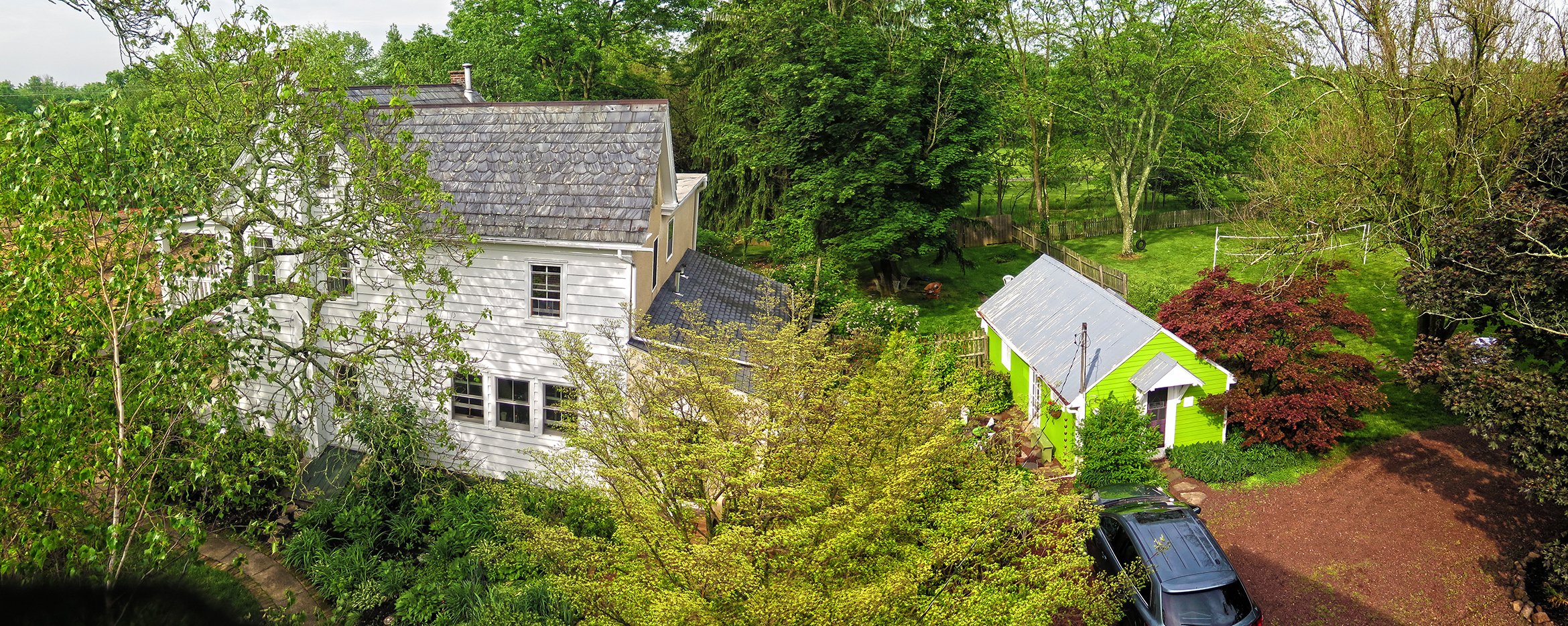
View of Property from the Barn. Photo courtesy of John Arehart Photography.

Historic Castles. What are they used for?

Fonthill Castle, Doylestown, Pennsylvania
I just came across this contest: Enter to Win a Castle Getaway, so I wanted to send it to all of you, my cherished subscribers. I hope you find time to enter. It’s a cool opportunity to tour two of Doylestown’s unique castles and stay overnight at a nearby Inn.
If you’ve ever wondered what modern-day people do with historic castles, allow me to share how one of my design couples showcased Fonthill in Doylestown, PA.
First, a little history
Fonthill Castle was the home of archaeologist and tile maker Henry Chapman Mercer. It was built between 1908 and 1912, and it’s an early example of poured-in-place concrete and features 44 rooms, over 200 windows, 18 fireplaces, 10 bathrooms, and one powder room.
Henry was a proponent of the American Arts and Crafts movement and as part of his philanthropy, he built The Moravian Tile Works on his Fonthill estate. Moravian tiles are handmade ceramic tiles featuring intricate designs inspired by ancient and historical themes. Here is an example of one. If you tour Fonthill you will see that Henry used his Moravian tiles everywhere when building his home. They cover ceilings, floors, and just about every square inch of this castle inside and out.

Castles Today
Special events like fundraisers, beer festivals, and weddings love the modern-day Fonthill Castle in Doylestown, PA. It’s a popular venue choice among those seeking a unique, historical building with a specific artistic flair.
Here is how one engaged couple decided to celebrate this castle.
A castle-inspired wedding invitation
Stephanie & Clayton chose Fonthill for their wedding venue a few years ago and hired me to design their invitation suite. This was a unique opportunity to build a concept around an artistic castle known for its clay tiles and yes, the groom’s name was Clay so the project was lots of fun.

The concept & Design
We hired a watercolor artist to paint a Mercer Tile-like cover depicting Fonthill Castle nestled among the many places Stephanie and Clayton had traveled. I had the opportunity to write some interesting headlines while building the stationery suite. “The Art of Marriage” was the main headline and “Start with a Good Clay” kicked off their story. The mini-book invitation creatively told their love story and culminated by inviting guests to the affair.

Carry it all through
To carry the concept through the entire event, I commissioned time with local tile artist, Katia McGuirk to help us create the wedding favors. The three of us worked side-by-side with Katia and designed, pressed, glazed, and fired an assortment of clay pendants, each depicting one of Stephanie and Clayton’s previous vacations. The clay pendants were used as favors, and each table featured the story of a particular vacation. We created a rubber stamp of each vacation icon and they were used to mark the table cards as well as all the place cards at the entrance.

Italy Pendant and Table Card

Canada Pendant and Table Card
Programs
The wedding programs were also unusual. We designed large, round, double-sided cards, and attached dangling love notes. “The Marriage” side outlined the ceremony details while “The Art” outlined the participants. It was an unexpected design that mimicked the round favor tiles and intrigued guests.

Enter to win
So now you no longer need to wonder what people sometimes do in and around modern-day Castles. If you choose one for your next big event, I recommend going with the castle’s cool vibe and designing your event accordingly. I hope you win this Castle getaway, and if you do please drop me a line. Good Luck!
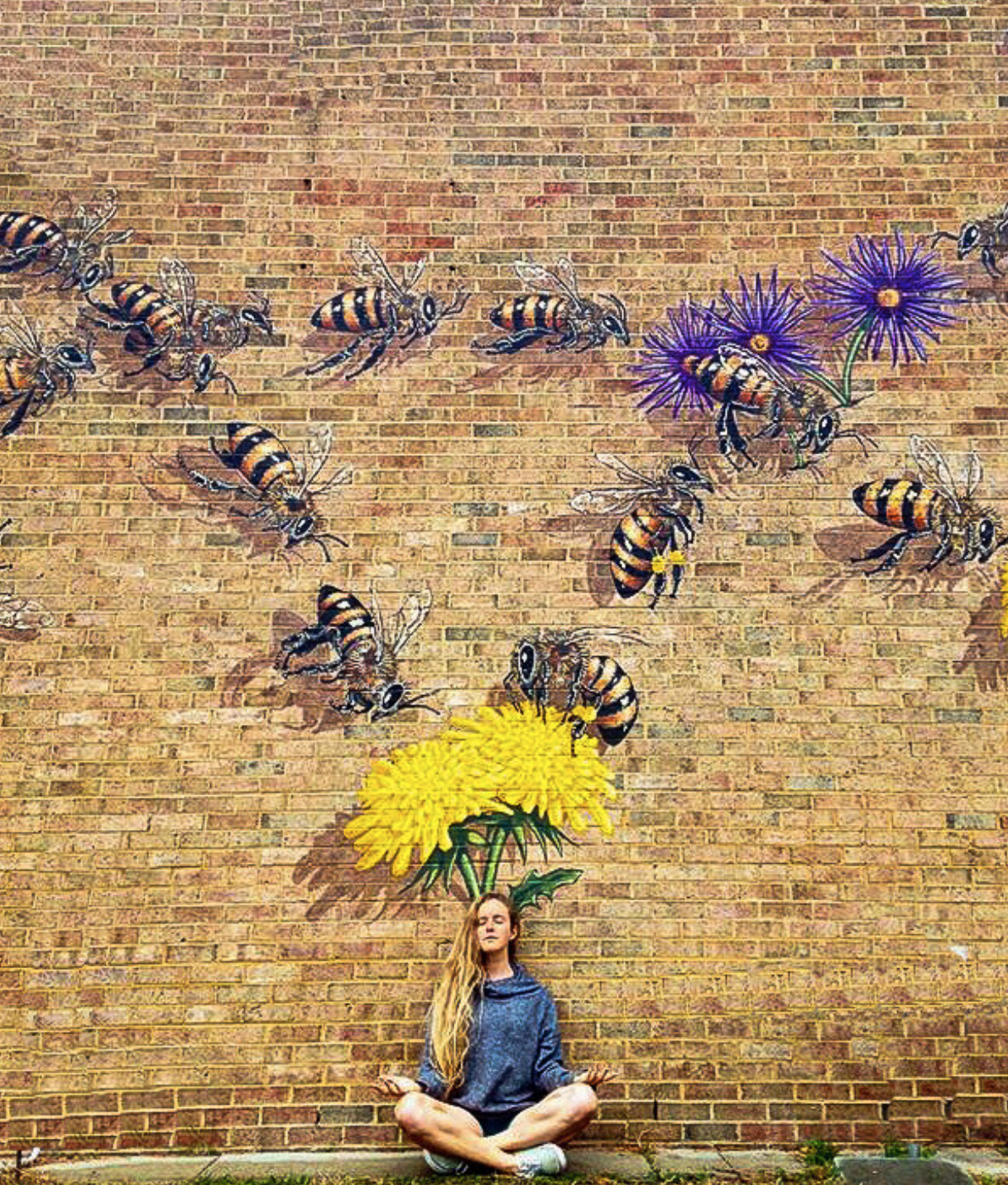
Let's Save The Bees
Because bees are so important for a healthy environment, Matt Willey from The Good of the Hive introduces the importance of bees in our lives through his mural art.
The Good of the Hive Mural @ St. James Parish- Scout Bee
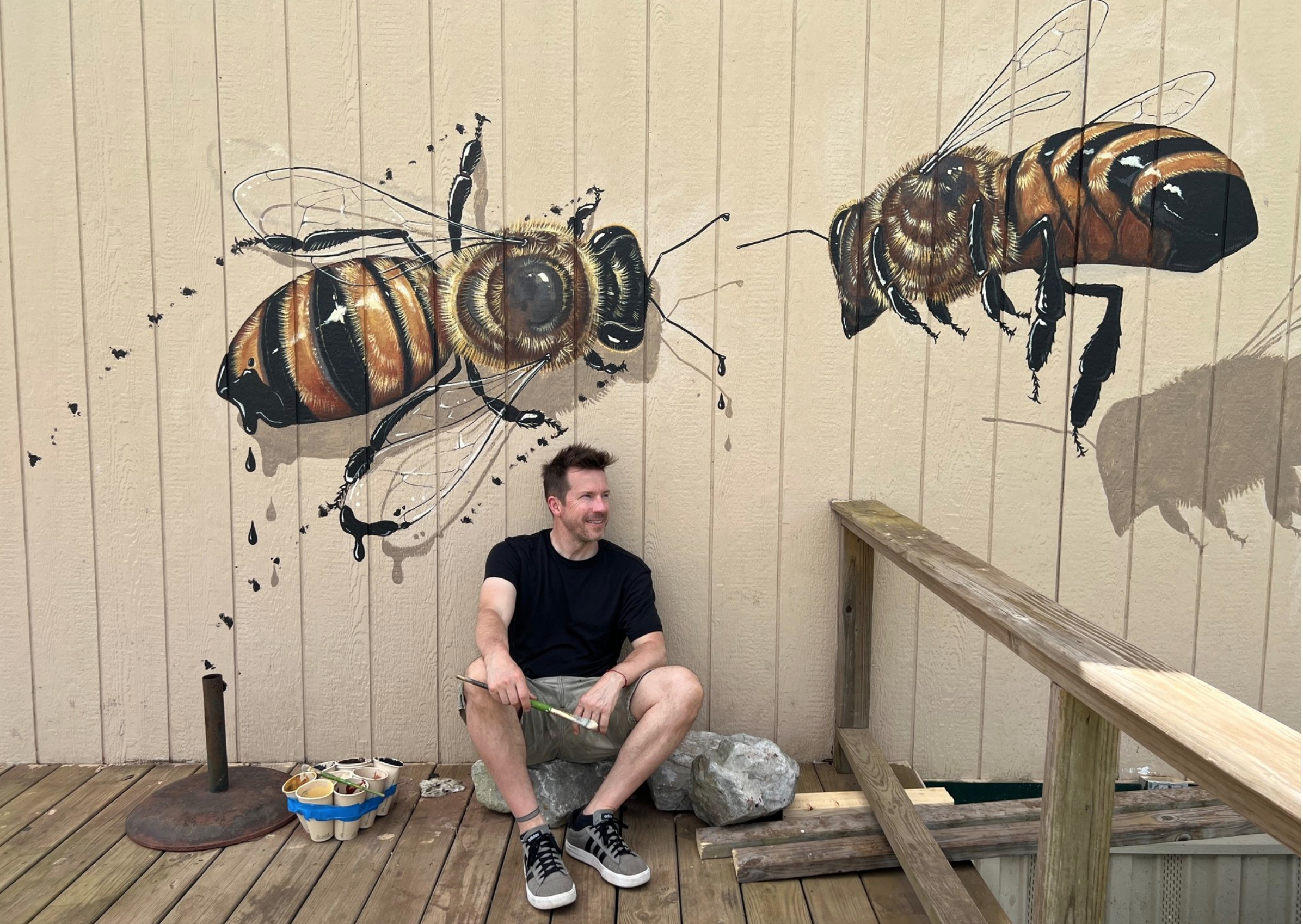
Introducing my favorite environmentally-conscious mural artist, Matt Willey.
After one little encounter with a small honey bee, Matt has lovingly begun a global art project: The Good of the Hive. His commitment to this project is to hand-paint 50,000 honey bees – the number in a healthy, thriving hive – in murals around the world. Matt's mission is to ignite radical curiosity and active engagement around planetary health issues through art, bees, and storytelling. I invite you to learn more….
The Western Honey Bee
Honey bees are not a native North American species. European honey bees (Apis mellifera) were originally imported for honey production in the 17th century, 1622 to be exact. Interestingly the Native Americans dubbed them "the white man's fly." I'll bet you didn't realize that a honey bee can fly up to 15 miles per hour and that a honey bee worker only makes an average of 1/12 of a teaspoon of honey in her lifetime and that to make just a pound of honey there need to be 2 million flower visits! -so please savor your honey, this is not an easy task for our little friends.

The Good of the Hive Mural @ Carrboro Fire Station, Carrboro, NC
“Bees never forget that they are part of something bigger than themselves… their hive is a part of them. What if we embodied this idea? What if we got curious about the world and each other again instead of intimidated by it? This is why I turn walls into windows – to remember that we are all connected… that separation is an illusion.” -Artist, Matt Willey
Honey Bee Colonies
A honey bee colony typically consists of three kinds of adult bees: workers, drones, and a queen.
The job of the queen: Lay eggs
The job of the drones: Mate with the queen
The jobs of the worker bees: Gather nectar, Guard the hive and honey, Care for the queen and larvae, Keep the hive clean, and Produce honey.
As you can see honey bees are social insects. They live together in well-organized groups called colonies. Individual bees cannot survive without the support of the colony. To learn more read this comprehensive article published by the University of Delaware.

The Good of the Hive Mural @ North Carolina Museum of Natural Sciences, Raleigh, NC
the health of our planet
Through Matt’s mural art, he is able to inspire education about our planetary health. He believes that human and planetary health is collective, and the global hive he is painting is a metaphor for the connectedness of all things. Six years into an estimated 20-year project, Matt has created 35 murals and installations with over 8600 hand-painted bees. He has reached hundreds of thousands of people and created large-scale works at the Smithsonian’s National Zoo in Washington DC, and at Burt’s Bees Global Headquarters. He has collaborated with the World Council of Peoples for the United Nations (WCPUN) and NYC Parks’ Art in the Parks Public Art Program. He has painted in a Tony-Winning Broadway star’s dressing room and his bees are on display at the American Embassy in Beijing, China.

The Good of the Hive Mural @ Harold P. Curtis Honey Co. Labelle, FL
Bees mean Business
According to the U.S. Department of Agriculture, honey bees pollinate $15 billion worth of crops in the United States each year, including more than 130 types of fruits, nuts, and vegetables. 2.70 million bee colonies in the United States, alone, produced 126 million pounds of honey in 2021. That year, the value of honey production in the United States was $321 million according to USDA-National Agricultural Statistics Service (NASS).

The Good of the Hive Mural
The Importance of Bees
A study, published in Proceedings of the Royal Society B, has shown that honey bees are the world's most important pollinators in natural ecosystems across the globe. Did you know, that according to the U.S. Department of Agriculture, one-third of our diet comes from insect-pollinated plants, and the honey bee is responsible for 80% of that pollination? In a single year, one honey bee colony can gather about 40 pounds of pollen and 265 pounds of nectar.
“The Art Starts Creating You” - Matt Willey

Worker Bee, Matt Willey - The Good of the Hive Mural Artist
The Importance of Matt
Follow Matt @thegoodofthehive as he visits schools and communities around the world educating our collective whole about the importance of our bees. In 2023 Matt will continue to move forward in the creation of The Good of the Hive's first documentary film. See the short film trailer by clicking here. Matt could really use some love on this project to keep it moving forward. Plus you can receive rewards and possibly have your name in the credits!

Apiarist: Beekeeper
The scientific name for the honey bee is Apis mellifera, therefore an apiarist is a person who is commonly referred to as a beekeeper and makes a living keeping honey bees. Likewise, an apiary is a location where the hives of honey bees are kept. Apiaries come in many sizes and can be rural or urban depending on the honey production operation.
Here on our farm, Windy Hill, we've enlisted the help of local Apiarist, Mark Antunes. Mark cares for our bees, extracts all honey, and because of our northern weather patterns, he even transports them to more temperate climates each winter. This has proven to be a good thing for their continued survival. Mark is always seeking host farms in this local area for his honey bee hives. If you would like to contact Mark, reach out to me in the comments below and I will get you in touch. I've also included a list of expert websites for your convenience.
rural and urban beekeeping
Rural Beekeeping is really just using a patch of land in more of a rural area used to raise bees. (it does not have to be a farm). Apiarists position one or more honey bee hives in this natural environment to support more pollination. The bees go to work quickly providing their services to enhance the growth of wild flowers, clover, vegetables, and more. If you are thinking about providing your own natural habitat for bees in the future, keep in mind a host farm requires plenty of food sources, water, and a healthy environment with plenty of natural resources such as grass, trees, and plants, and of course, it's important for there to be no pesticide use whatsoever. For your convenience, I've included a short list of supplies you may want to consider at the end of this blog.
Urban Beekeeping is just what it sounds like, an organic method for a city or town to diversify its ecosystem. If you are considering becoming an urban beekeeper, you must first do some research. Be sure to make sure it's legal to keep bees in your town or city. Next, be sure your bees will have enough space and the necessary food and water in order to thrive. Then, be sure to check with your neighbors, because although honeybees are generally not aggressive, if threatened they will sting and it’s very important to always see the advice of a skilled beekeeper before trying this at home.

Honey jars from the honey bees at Windy Hill Farm, PA
Keep some bees
Bee-Keeping Supplies
Beekeeping Suit for men
Beekeeping Suit for women
Beehive
Beehive Smoker
Beehive Smoker Pellets
Honey Serving Supplies
Small Honey jars with cork lids
Small Jar Labels
Honey dipper sticks

The Artist Matt Willey - The Good of the Hive
What is Colony Collapse Disorder
Honey bee health is something we humans have been struggling with in recent years as our honey bee populations have been dwindling. To help you understand, Colony Collapse Disorder is the phenomenon that occurs when the majority of worker bees in a colony disappear and leave behind a queen, a plentiful food supply, and a few nurse bees to care for the remaining immature bees. There is often a combination of environmental factors and other stresses to consider when determining what has a significant effect on bee declines, including humanity's negative impacts.
Honey bee stressors and a link to learn more.
Use of pesticides
Stress due to management practices
Varroa destructor mites
Israeli Acute Paralysis virus and the Nosema parasite
Climate change and habitat loss
Not enough food or poor nutrition
If you enjoyed this blog please feel free to comment below. I read every inspiration that comes my way. Subscribe if you like this blog. Thank you. - Kim
A Little Buzz: Check out The Bee and the Wasp Vintage Rentals. Introducing a Boutique Rental Company specializing in Vintage, Boho, and Rustic looks. Upcycling and reuse are always good for the environment, so for your next event consider rentals as an alternative to new decor. The bees will thank you.


Pink Dahlia with honey bee
If you’re a blogger, what’s your favorite SEO Tool? I’ve had much keyword success with RankIQ. Learn more here. This post contains affiliate links which means I make a small commission at no further cost to you. Thank you very much.

10 Ideas for an Eco-Friendly Event or Wedding
10 Ideas for an Eco-Friendly Event or Wedding

Boutonniere design by Studio Sprig. Flower Farm Southern Pines at Cornerstone Farm. Photography by Karmapants
There is so much that goes into planning any event large or small, and remembering to keep things simple and reduce your carbon footprint may be your most difficult challenge. Did you know that the average wedding produces a massive 400 pounds of garbage and 63 tons of CO2? It's not surprising to me, having worked in the industry for over 25 years, but it is disappointing.
The good news is that there are many eco-friendly ideas you can implement when planning your next event if you don’t want to contribute to that excessive waste. Whether it's your wedding day, or just a big day celebration, always considering your environment and your carbon footprint is very important.
First, try breaking your event down into manageable bites by making two lists: "must-haves" and "can live without". You'll quickly find that it's not as difficult as you may have thought and sorting now helps to simplify everything later. Here are ten things to closely consider when planning your day.
1. Consider a Micro event
When creating your guest list, remember it's quality, not quantity that matters. Good news, some of the most special events are very intimate affairs. Although the word micro doesn't only have to describe your guest list, there are plenty of ways to "Go Micro" for the environment, and still have a sizable guest list.
2. Hire an event Planner
At first, an event planner, 'day of', or coordinator might seem like an extravagance that you can't afford, but hiring an event or wedding planner may prove to be your best decision overall, and here's why. Planners plan all day, every day. They know the venues, the entertainment, and all of the little idiosyncracies that might trip you up along the way. They can save you a lot of time, wedding waste, aggravation, money, and especially all that running around. So don't rule them out before you begin. Consider your location, time availability, and energy level. Where are your efforts best allocated?

Venue Hotel Du Village. Flower design by Studio Sprig. Flower Farm Cultivating Joy Flowers. Photography by Elle Studios
3. find A Beautiful Venue
When hunting for a venue, it's a good idea to open your eyes wide and focus on everything, not just capacity and catering options. Look in every corner of the interior, entryways, hallways, bathrooms, and outside in the gardens, parking lots, and all around the grounds where your guests may wander. Take it all in, because this is one area you can really save a bundle.
We all know what it can cost to decorate an empty social hall, school, or ill-styled restaurant. Sure, the price may be fine and they may provide you with tables and chairs, but is that enough? Chances are you'll need to provide all of your own linens, centerpieces, flower embellishments, arches, favors, candles, and sometimes even food. The list can go on forever. But some more inclusive venues provide most of those things and provide you with the proper ambiance that wipes all of the other items off of your list.
Take this gorgeous barn, for instance. It belongs to a good friend of mine and requires minimal embellishment to make it really pop for a small-medium event.

A micro-event at Southern Pines at Cornerstone Farm.
Beautiful venues really focus on visual impact. When touring, take a good look around outside because so many venues have beautifully landscaped grounds and gardens that need no embellishment at all. The decore is built-in. In fact, adding decor can actually take away from the natural beauty that is already there. In some cases, you can host your entire event in a garden space and not need to purchase anything to enhance the event. The flowers and greenery are already all around you! And be inquisitive, many venues today offer a room full of rentable decor, candle votives, large flower planters, and other items for your tables Some even offer these items to customers free of charge. Always ask the venue coordinator, you may be surprised by what they already have and are willing to provide. This is always a better option than buying everything new if you are only intending on using it for one day.

Flower design by Studio Sprig. Flower Farm Southern Pines at Cornerstone Farm. Photography by Littlewing Studios
Here is a peek into Cassia & Justin's green wedding on a beautiful farm property in East Greenville, PA. The wedding took place during covid and the couple did a wonderful job creating a micro event that mimicked an old country wedding. After a couple’s photo session next to the barn and in the fields, everyone walked from the outdoor ceremony up the small hill to the reception which was inside a glass-enclosed mini barn. Most guests stayed overnight on the property at the Inn, just a few steps away. The reception decor was simple and consisted of buckets of fresh flowers and herbs which the bride and maids placed onto three unique micro cakes and into small glass bottles. Photography courtesy of Littlewing Studios.

Herbs grown by Studio Sprig. Flower Farm Southern Pines at Cornerstone Farm. Photography by Littlewing Studios
4. beg, borrow or thrift
If your event is repeated and let's say you host annually, then I'd suggest just purchasing the linens and other necessary items once, and using them as much as possible, but if renting or borrowing is available to you and that makes more sense, then do it.

Flower Farm Southern Pines at Cornerstone Farm. Photography by Littlewing Studios
When searching for vases, candle holders, or other tableware, I suggest always starting at consignment or thrift shops. Antiques are always nicer than new and giving these items a second look is commendable and very green.
I also always encourage my clients to borrow. It’s likely a friend or family member has just the thing you are looking for. Over the years I’ve created many centerpiece arrangements using cherished family heirlooms as the vessel. Delicate teacups, a vintage bottle collection, you name it. Added bonus: there’s often a sentimental story attached to these pieces and guests enjoy hearing it.
5. Host an event At Home
Don't underestimate the space you have right under your nose. This idea always scares people, but using your own home is an easy way to reduce your costs tremendously if cost is a concern. You do not need large furniture or vast spaces to entertain at home. Honestly, I've hosted many events here on our farm both outside in the yard, and inside in our four small lower-level rooms. Our home is not big because it's 172 years old and the rooms were designed to keep people warm and close. But because we always knew we loved to entertain, we made a few good renovation choices over the years and they have helped us achieve this goal successfully.
Many of us have incorporated a patio or deck into our outdoor landscapes. These areas are always great choices for hosting a warm-weather event. I've hosted many events on our very small deck with a round iron table that only seats 4! Truth be told I bought that table at a yard sale, 23 years ago. No matter, because it still works great and when I need more seating, I just add smaller cafe tables, benches, and bars made from old barn doors (all purchased on the Facebook marketplace) to accommodate guests. Miscellaneous ensembles can make our deck look like an eclectic cafe and I'm okay with that vibe.

As for the lawn space, I try to use most of that too. If our event is larger and I need lots more seating, I just rent long tables and chairs from our local rental store. They rent for the entire weekend so I can sometimes squeeze two parties out of one rental. It's relatively inexpensive to rent and very easy because I do not have to worry about storing anything.
6. Stay Local
Choose your event space or wedding venue wisely. The environment is always impacted by where you chose to host. If you want your guests to fly to a destination wedding, for instance, this will undoubtedly affect the sustainability of your event. But driving long distances may as well. There are creative ways you can keep everyone local so they almost don't need to travel at all.

Source: The Knot
Take for example the New Orleans Second Line Wedding Parade, a brass band processional tradition that predates the Civil War. Modern couples incorporate this historic custom into their wedding to give homage to their New Orleans roots. In this tradition, the brass band leads guests on foot from the wedding venue to the reception venue. Now, you'd need for your venues to be near enough, but even if you don't hire an escort band, you could incorporate an eco-friendly l between-venue walk, also popular with rural weddings long ago. And if you have a family member with limited mobility, come up with a cherished way to honor them in your foot parade.
7. eco-conscious sourcing
Casual Biodegrading
If your event calls for more casual, disposable serving products like plates, utensils, and napkins it's best to always choose biodegradable materials instead of plastic. Not only will you have less waste, but you won't contribute to the pounds of trash that most events do.
But don't worry going green does not mean you are not limited to paper goods. There are so many sustainable options today. Below I’ve compiled a list of natural sources with links to compostable dinnerware you can order for your next event. I hope you find a sustainable alternative that fits your style.

Photo courtesy of Maggpie Rentals
Glamorous Renting
Consider renting fancy dishware and glassware instead of buying everything. This opens up the door to an extra level of glam, while still impacting the environment in a positive way.
And did you know you can easily rent almost anything you need? For instance, the seating ensemble above, and many others can be rented from Maggpie in Boyertown, PA. If you have an empty space to fill or just need an interesting backdrop, shop the exact look you want and rent it! Here is a list of other beautiful and off-beat rental options you may not have known about.

Design by Studio Sprig. Handmade Paper Porridge Papers. Eco-Conscious Printer Bucks Digital. Twig from backyard.
Sustainable Stationery
When considering your event stationery needs, it's best to always use recycled or handmade paper and nontoxic inks - or search for sustainable or eco-friendly graphic designers and printers like Bucks Digital, in your area if you are not the DIY type. And if you love to DIY, a great paper source is Greenfield Paper Co. from California. They have reinvented the age-old tradition of creating fine paper without cutting down trees. Green Field Paper Company offers three lines of recycled papers that integrate post-consumer pulp with non-traditional additives such as seeds, hemp, coffee chaff, denim, junk mail, and garlic skins! All of their products are made in the USA and they do not use any dyes or bleach. Earth pigments are used to color the papers and all of their seed paper contains non-GMO non-invasive seeds. Or Porridge Papers, my source in the design above, whose owner Christopher once produced a single custom sheet that was sent to Martha Stewart and another order of 2.2 million pieces embedded with lettuce seeds for Kraft Foods. Using seeded and plantable paper is really cool, good for the environment, and a way to save the “memory” of your event.
8. Stay in Season
Flowers
If you choose to incorporate beautiful flowers or plants into your event design, always try to stay in season. Seasonal blooms have always been the goal of Studio Sprig for many reasons. First of all, they are much fresher and much more beautiful, in my opinion. Many times they are harvested one or maybe only two days before your event. This means they not only look their best, but they will hold up longer if you want to repurpose them afterward. Staying in season is so good for the environment because you are using what nature is already providing instead of forcing growth in greenhouses far away in climates more suitable. Here is a nice guide for choosing flowers by season.
Food & Drink
Building your menu around the seasons is such a smart idea. Tomatoes always taste better in summer. We all know this. Staying in season and trying to use local farms eliminates the need to transport food long distances at great cost. Most chefs would jump at the chance to create a menu with only seasonal ingredients, and if you are preparing the food and drink yourself, here are two helpful books.


9. Grow Your Own flowers
When it comes to your event or wedding flowers, there are plenty of sustainable flower farmers you can choose from. Some of them have designers on the premises while others contract the service.
Another good option might be to plan ahead and grow your own. This is much easier if you're planning a micro event or a larger event with less need for custom flowers and greens. But if you or someone you know is an avid gardener, this endeavor could be very rewarding. If you do decide to do this, however, I’d recommend a backup plan just in case. Weather and pests are obstacles to be aware of. This book by Floret’s Erin Benzakein is a well-organized guide to growing your own.

Ann Hayes of Southern Pines at Cornerstone Farm gives a tour of her dahlia fields.
And did you know you can also hire local farmers to grow flowers for you? I work with several growers willing to do this if they have enough lead time and can grow what the event requires in the correct season. And when local farmers grow your flowers you have the peace of mind that the job will get done right and if they do run into a problem on your special day, they are most likely to have a surplus of other varieties for you to choose from and/or the connections to get what you need.
Cool idea: Hosting a tour of the flower farm growing your event flowers is a unique way to bring a small group from your event together. It’s a fabulous setting for an outdoor bridal shower or with this tour you can create an educational precursor for an eco-friendly fundraising event.


10. Donate whenever possible
Food
One great way to avoid a lot of food waste after your catered event is to donate your leftover food to a local church, animal shelter, food bank, or homeless shelter. You'd need to follow food safety guidelines of course and ask your caterer if they have a process in place for this already, but if they do not here are some links that may help you find what you are looking for.
Feeding America: Looking for a Food Bank near you
Great Nonprofits: Looking for a Homeless Shelter near you
Humane Society: Looking for an Animal Shelter near you
Decor & Flowers
Donations of decor are also appreciated greatly. Perhaps you know you'll never use 200 votive candle holders again or you just don't have space for the 25 vases you accumulated. There's probably a bride out there somewhere who would love to recycle your glass jars for you. Or maybe some local hospitals could use a few fresh floral arrangements for their lobby this week. One of the easiest ways to resell your lightly used decor is on the Facebook marketplace.

Flower design by Studio Sprig. Flower Farm Detweiler Homestead. Photography by Taylor Cotilla
Enjoy this glimpse of Lindsay & Jordan's late summer wedding. Lindsay requested a pure white, sustainable bridal bouquet so I chose to work with one of my local favorites, white lisianthus. These focal flowers were grown on the reputable Detweiler Homestead Farm originally in Telford, PA, and they were accented with greens harvested from Bloom Flower Farm, originally from Hilltown, PA. A bridal, one bridesmaid bouquet, several boutonnieres, and cake flowers were the complete floral order for this beautiful, micro event.
Thank you for reading this blog, Please comment below and share your thoughts and suggestions. I’ve included some great resources below. Just click the image for your convenience. If you enjoyed this blog and would like to sign up please join our subscriber list here.


This blog is a personal blog written and edited by me. For questions about this blog, please contact Kim@kimbensingdesign.com. If you’re a blogger, what’s your favorite SEO Tool? I’ve had much keyword success with RankIQ. Learn more here. As an Amazon Associate, I earn from qualifying purchases. Thank you. This blog does not contain any content which might present a conflict of interest.
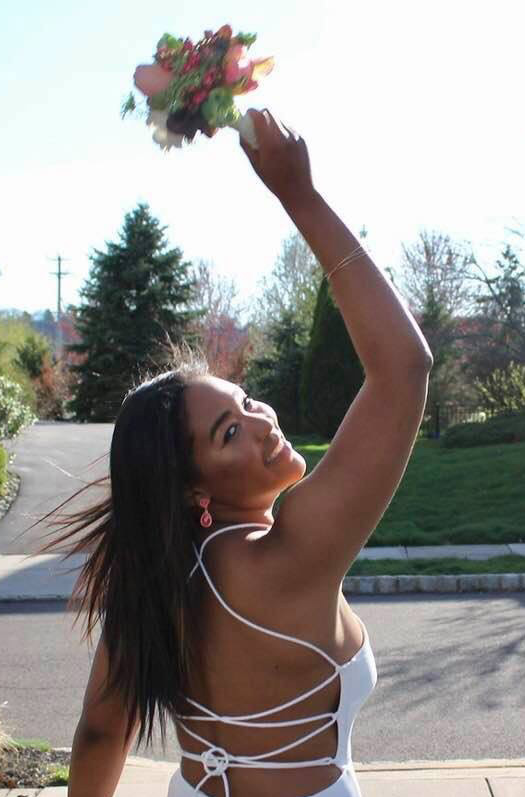
Why You Should Choose Seasonal Prom Flowers
Why it’s important to choose a floral designer using seasonal flowers for your prom.

Prom is the one ‘school’ day each year where you can really shine. You’ll brighten the room with your stunning gown and glamorous hair, so why should your flowers be mediocre, bland, and quite frankly, dull?
Many of you know I began designing flowers in 2016 after many years of designing as an Art Director. Studio Sprig is my Bucks County, PA design studio that thrives on working with, not against, the environment. What that means is that I work with the seasons to choose my flowers, herbs, and sprigs whenever possible. I’ve cultivated relationships with many local growers and I’ve worked hard to learn how to create floral designs creatively using as much “seasonal nature” as I can. Much the same theory as your preference for fresh from-the-garden tomatoes in the summer only. We all know it’s because summer tomatoes taste so much better than winter tomatoes. Flowers are no different. They are so much fresher and more beautiful when they are grown locally. Their stems are not thick because they were bred for long travels. Their fragrance is not absent because they were bred to produce more and not for their scent. They look better and last longer because they were probably harvested yesterday as opposed to 3 weeks ago so they could lay dormant in a big, dark cooler.

Purple and White Anemone Prom Posy.
Hands down, local is the way to go. And the great news is that in this portion of the country, we have a plethora of local farms growing beautiful flowers. You just need to know where to look. Don’t worry, you don’t need to because I have done the homework for you. All you need to do is learn what flowers are in the season of your event. Whether is a prom or a wedding or even just a smaller party, if it falls between March - November (Northeast United States), chances are there are beautiful flowers you can count on.
In this story:
Spring Wedding Flowers
Spring couples are in luck because so, so many flowers reach peak bloom during the spring. Plus, the colors, from purple lilacs and hyacinths to soft pink sweet peas and peonies, are just divine. Learn more about in-season spring flowers here.
Best March Flowers Wedding Flowers
Ranunculus Given that ranunculus is such a popular flower, many couples look into procuring it all year long. However, it naturally blooms during late winter and early spring so it'll look especially fresh and sprightly at a March wedding.
Sweet Pea This delicate bloom smells great and looks amazing, but is only available for couples tying the knot in late winter or early spring.
Tulip Much like daffodils, tulips are a classic late winter and early spring flower. Tulips (which come in shades as varied as vibrant yellow to pastel pink) bring an elegant, refined feel to wedding arrangements. Much like daffodils, tulips are an iconic spring bloom known for their distinct shape and vibrant colors. Fringe tulips are a trendy variety that continues to gain popularity among florists and nearly-newlyweds alike.
Anemone
Known for their iconic black center, anemone flowers bring a fun and whimsical element to all floral designs. Anemone season runs from October through May so winter couples and spring couples alike can make use of this dramatic flower.
Daffodil
Daffodils are the quintessential spring flower. The trumpet-like blooms, which are available from February through May, would look beautiful in assorted bud vases on your reception tablescapes.
Hyacinth
Hyacinth, which is generally available in early- to mid-spring, is a great addition to spring wedding bouquets. The plant, which comes in a variety of colorways from pink and purple to white, grows in USDA Hardiness Zones 4-8, which means it's readily available across the US.
Best April Wedding Flowers
Sweet Pea While most couples think of pink and peachy hues for sweet peas, the botanical also grows in brown and purple colorways as well.
Lily of the Valley A favorite of the British royal family, this small bloom is great for an April garden wedding.
Hyacinth Similar in shape to lilacs, hyacinth (which can be white, pink or purple) works well in spring centerpieces that benefit from the plant's height.
Lily of the Valley
A favorite of the British royal family, lily of the valley is a great option for formal, luxury weddings. While orchids and calla lily blooms are great go-tos for luxe weddings during the colder months, lily of the valley is the best bet for spring couples who want a formal, classic flower.
Best May Wedding Flowers
Peony Peonies are beloved by many to-be-weds, but sadly have a relatively short growing season. Only a few lucky mid-Spring couples are able to utilize this lush flower in their designs. Peonies, which flower from April through June, come in a variety of colors so there's sure to be one that fits your aesthetic. White peonies would look at-home in a bridesmaid or bridal bouquet at a romantic estate wedding while vibrant coral charm peonies would complement a whimsical barn wedding beautifully.
Hydrangea Great for large-scale installations at weddings, hydrangeas are at their peak before seasonal temperatures get hot, causing them to wilt.
Lilac A quintessential spring flower, lilacs are a great option for May couples who want a bold pop of purple in their flower arrangements.
What's not to love about the soft pastel purple hued lilacs? Lilacs are most readily available in northern states from mid- to late-spring. For couples on the hunt for more purple wedding flowers, clematis is an option that's mainly available during the summer months, but may be able to be procured for a late-spring wedding.
Poppy
Poppies are a stunning bloom, but the flower is fragile so it works best when used sparingly alongside more hardy flowers. Poppies bloom in USDA Hardiness Zones 3-8 and are generally available from late spring to early summer.
Best June Wedding Flowers
Rose Roses can be procured almost anywhere during any time of the year, but they look especially great at June weddings. Since June is a transitional time as late spring gives way to early summer, some strictly spring or summer flowers are hard to come by. However, rose is a timeless standby that works in any wedding aesthetic.
Delphinium (Larkspur) Delphinium, also known as larkspur, looks similar in nature to Bells-of-Ireland or stock. Delphinium works well as ceremony aisle flowers because of the height it brings to arrangements.
Gardenia Gardenias are especially fragrant flowers so care should be taken when deciding to incorporate them into boutonnieres or bouquets as some may have sensitivities to smell. Nevertheless, the spring flower is a beautiful option for romantic and elegant occasions.
Hydrangea
The volume hydrangea brings makes it a great flower for wedding arrangements. If you've always dreamed of an all-white bouquet but don't want it to be a strictly rose bouquet, ask your floral designer to layer in other white flowers, like hydrangea, into the design. Another reason to-be-weds love hydrangeas? They're available starting in the spring, but continue to bloom through the summer and into early fall.
It’s here we create our prom posies and boutonnieres with flowers, herbs, and greens grown by local, small-scale growers who honestly care about their harvest. We style unique, magical posies and boutonnieres that will take your breath away and make others swoon. This year, be a little wild and choose Sprig. XXOO - Kimberly

All of the prom dates of the Conestoga High School Crew Team received unique Studio Sprig Posies.
Here’s your chance to be unique by creatively capturing glorious spring in one perfect, little, hand-wrapped posy. Lucky for you, just about now, loads of yummy local Pennsylvania flowers are bursting from the ground. Striking beauties called “Amandine Marshmallow” Ranunculus, “Panda” Anemone, specialty tulips like “Exotic Emperor” and delicate daffodils with fabulous names like “Sunny Girlfriend” are varieties you can look forward to.

Lilacs, hellebore and orange tulips to accent this pretty blue dress.

White panda and deep purple anemone, lilacs and sprigs in this prom posy.

White and pale pink peony for a May prom.
Contact Kimberly for your complimentary style consultation. 215.859.2202
Thank you for reading. Subscribe to this blog here.
Hi, I’m Kim. Welcome to Studio Sprig.
Kim Bensing’s original watercolors and designs are now available on wallpaper and fabric. To order visit Studio Sprig’s design library on Spoonflower. Contact me if you need assistance.
-
EVENTS
22
- Oct 23, 2026 Wrapped in Wonder: The Art of Giving a Gift Oct 23, 2026
- Sep 26, 2026 Homecoming Flowers: A Beautiful Tradition Then and Now Sep 26, 2026
- Sep 23, 2026 Choose Wedding Flowers With Meaning: How to Create a Bouquet That Tells Your Love Story Sep 23, 2026
- Sep 21, 2026 The Pre-Prom Tradition Every Mom Should Try: Host a Backyard Bouquet Party Sep 21, 2026
- Sep 18, 2026 Lambertville’s Halloween Magic: A Funky, Creative Rivertown Comes Alive Sep 18, 2026
- Aug 20, 2026 How to Host a Beautiful Flower Bar: The Ultimate DIY Flower Bar Party Guide Aug 20, 2026
- Aug 19, 2026 How to Decorate Cakes with Fresh Flowers: Floral Wreaths, Crowns & More Aug 19, 2026
- Aug 19, 2026 Decorating Cakes with Fresh Flowers Aug 19, 2026
- May 18, 2025 How to Make DIY Bouquets for Prom May 18, 2025
- May 7, 2025 How to Preserve and Use Your Spring Flowers - All Year Long May 7, 2025
- Feb 27, 2025 Get Excited for The Flower Show Feb 27, 2025
- Feb 14, 2025 Historic Castles. What are they used for? Feb 14, 2025
- Jan 31, 2025 Creative Ideas For Your Valentine Jan 31, 2025
- Jan 28, 2025 How An Invitation Can Tell Your Love Story Jan 28, 2025
- Jan 23, 2025 How to Design a Valentine Tree Jan 23, 2025
- Jan 16, 2025 Host a Fabulous Bouquet Bar for Valentine's Day Jan 16, 2025
- Apr 4, 2023 Why Choose Seasonal Flowers for Your Special Occasion? Apr 4, 2023
- Feb 1, 2023 10 Ideas for an Eco-Friendly Event or Wedding Feb 1, 2023
- Nov 14, 2022 A Family Tree Inspired Wedding Invitation Nov 14, 2022
- Oct 3, 2022 How to choose flowers that have sentimental meaning Oct 3, 2022
- Nov 9, 2020 Simplified Wedding Ceremony during Covid Nov 9, 2020
- Apr 2, 2019 Why You Should Choose Seasonal Prom Flowers Apr 2, 2019
-
HOME
23
- Sep 9, 2026 How to Name a Farm: 10 Meaningful Ideas for Creating a Name With a Story Sep 9, 2026
- Sep 1, 2026 How to Preserve Flowers for Creative Projects Sep 1, 2026
- Jul 2, 2026 How to make your own flower confetti Jul 2, 2026
- Apr 22, 2025 How We Painted our Barn Apr 22, 2025
- Apr 16, 2025 What to Plant for Mesmerizing Spring Blooms Apr 16, 2025
- Apr 8, 2025 Narcissus AKA Daffodil - What's Blooming at Studio Sprig Apr 8, 2025
- Apr 1, 2025 Glory-of-the-Snow - What's Blooming at Studio Sprig Apr 1, 2025
- Mar 19, 2025 How we turned an Artist Studio into a Weekend Retreat Mar 19, 2025
- Mar 12, 2025 The Mighty Crocus - First to Bloom - What's Blooming at Studio Sprig Mar 12, 2025
- Jan 23, 2025 How to Design a Valentine Tree Jan 23, 2025
- Jan 16, 2025 Host a Fabulous Bouquet Bar for Valentine's Day Jan 16, 2025
- Jan 9, 2025 How to Make Your Own Mint Tea Jan 9, 2025
- Jan 7, 2025 How To Create A Courtyard Jan 7, 2025
- Jan 2, 2025 How to Create a Stunning Centerpiece Jan 2, 2025
- Mar 27, 2023 How We Transformed Our Farmhouse Kitchen by Reusing, Updating, and Thrifting: (Coffee Bar) Mar 27, 2023
- Mar 27, 2023 How We Transformed Our Farmhouse Kitchen by Reusing, Updating, and Thrifting Mar 27, 2023
- Mar 1, 2023 How and Why We Love Historic Homes Mar 1, 2023
- Jan 3, 2023 Eliminate Sneaky Sugars Jan 3, 2023
- Dec 14, 2022 How to Create a Pretty Mini Bar with Items You Already Own Dec 14, 2022
- Nov 21, 2022 Friendsgiving At Our Farm Nov 21, 2022
- Nov 9, 2022 Herbs: How to Grow, Harvest and Dry Your Own Nov 9, 2022
- Nov 9, 2022 DIY Herb Drying Rack: Herb Drying at Home Nov 9, 2022
- Oct 12, 2022 Have you ever thought about creating a beautiful water feature? Oct 12, 2022
-
STYLE
27
- Oct 6, 2026 Where Flowers Become Art, Experiences & Memories Oct 6, 2026
- Sep 1, 2026 How to Preserve Flowers for Creative Projects Sep 1, 2026
- Aug 20, 2026 How to Host a Beautiful Flower Bar: The Ultimate DIY Flower Bar Party Guide Aug 20, 2026
- Aug 19, 2026 How to Decorate Cakes with Fresh Flowers: Floral Wreaths, Crowns & More Aug 19, 2026
- Aug 19, 2026 Decorating Cakes with Fresh Flowers Aug 19, 2026
- Jul 2, 2026 How to make your own flower confetti Jul 2, 2026
- Nov 3, 2025 Creating a Pressed Flower Frame Nov 3, 2025
- May 7, 2025 How to Preserve and Use Your Spring Flowers - All Year Long May 7, 2025
- Jan 28, 2025 How An Invitation Can Tell Your Love Story Jan 28, 2025
- Jan 23, 2025 How to Design a Valentine Tree Jan 23, 2025
- Jan 6, 2025 How to Create Oyster Shell Necklaces Jan 6, 2025
- Jan 2, 2025 How to Create a Stunning Centerpiece Jan 2, 2025
- Mar 14, 2023 How to Make Sentimental Easter Eggs Mar 14, 2023
- Mar 6, 2023 How to Enjoy The PHS Philadelphia Flower Show Mar 6, 2023
- Feb 13, 2023 Let's Save The Bees Feb 13, 2023
- Feb 1, 2023 10 Ideas for an Eco-Friendly Event or Wedding Feb 1, 2023
- Jan 12, 2023 A Great Way to Help Kids with Cancer (PENN STATE) Jan 12, 2023
- Dec 14, 2022 How to Create a Pretty Mini Bar with Items You Already Own Dec 14, 2022
- Nov 29, 2022 Lunch and Dinner -Studio Sprig Style Micro Blog Nov 29, 2022
- Nov 14, 2022 A Family Tree Inspired Wedding Invitation Nov 14, 2022
- Nov 9, 2022 DIY Herb Drying Rack: Herb Drying at Home Nov 9, 2022
- Oct 30, 2022 Lambertville, Nj , A Funky, Cool Rivertown You Must Visit on Halloween. Oct 30, 2022
- Oct 19, 2022 How to choose an interesting place to stay when you travel or go on vacation Oct 19, 2022
- Oct 12, 2022 Have you ever thought about creating a beautiful water feature? Oct 12, 2022
- Oct 3, 2022 How to choose flowers that have sentimental meaning Oct 3, 2022
- Feb 1, 2021 How to design marketing materials for your small business Feb 1, 2021
- Oct 29, 2020 Surprise the bride when you can't come to her wedding Oct 29, 2020