

Let's Save The Bees
Because bees are so important for a healthy environment, Matt Willey from The Good of the Hive introduces the importance of bees in our lives through his mural art.
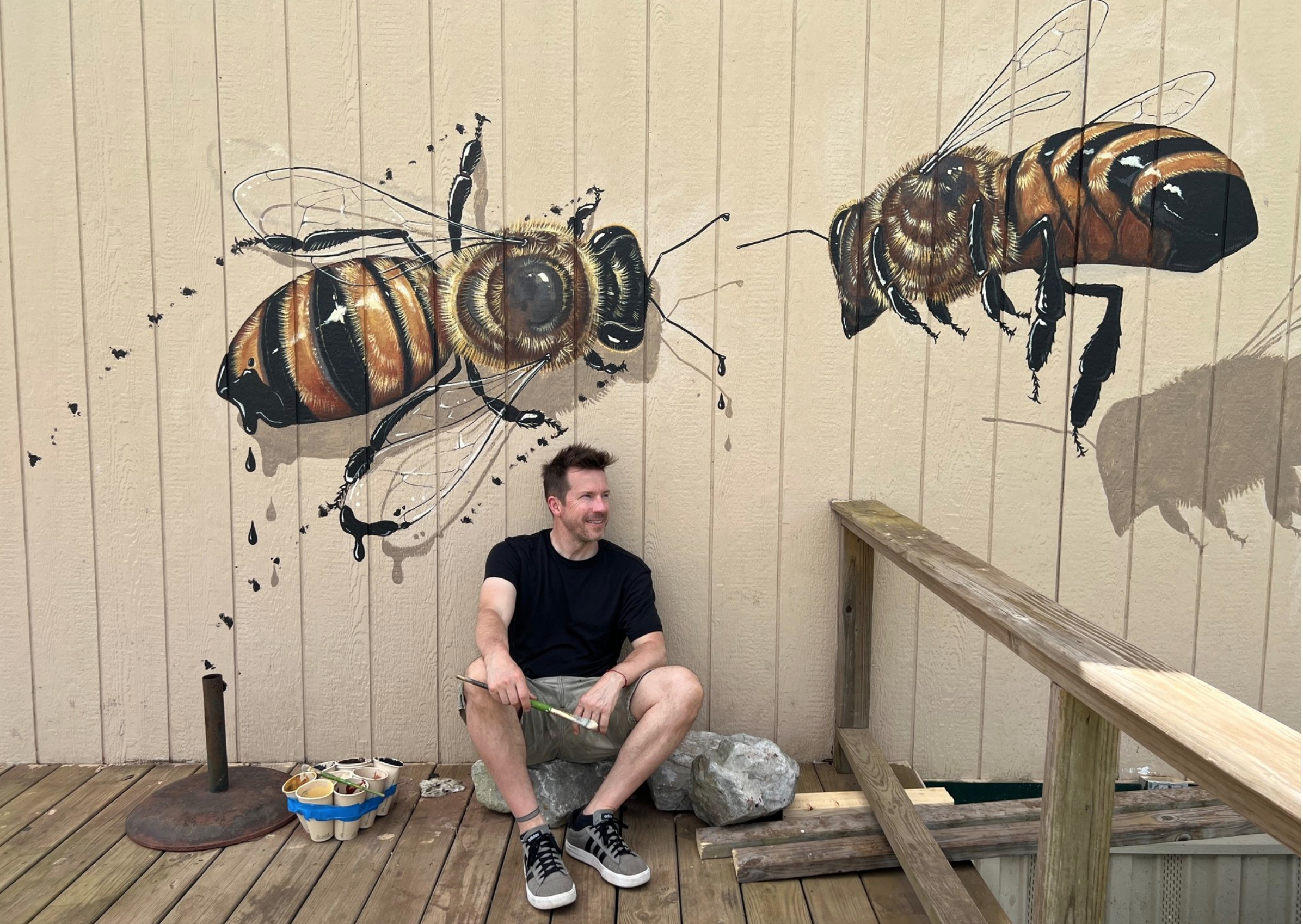
The Good of the Hive Mural @ St. James Parish- Scout Bee
Introducing my favorite environmentally-conscious mural artist, Matt Willey.
After one little encounter with a small honey bee, Matt has lovingly begun a global art project: The Good of the Hive. His commitment to this project is to hand-paint 50,000 honey bees – the number in a healthy, thriving hive – in murals around the world. Matt's mission is to ignite radical curiosity and active engagement around planetary health issues through art, bees, and storytelling. I invite you to learn more….
The Western Honey Bee
Honey bees are not a native North American species. European honey bees (Apis mellifera) were originally imported for honey production in the 17th century, 1622 to be exact. Interestingly the Native Americans dubbed them "the white man's fly." I'll bet you didn't realize that a honey bee can fly up to 15 miles per hour and that a honey bee worker only makes an average of 1/12 of a teaspoon of honey in her lifetime and that to make just a pound of honey there need to be 2 million flower visits! -so please savor your honey, this is not an easy task for our little friends.
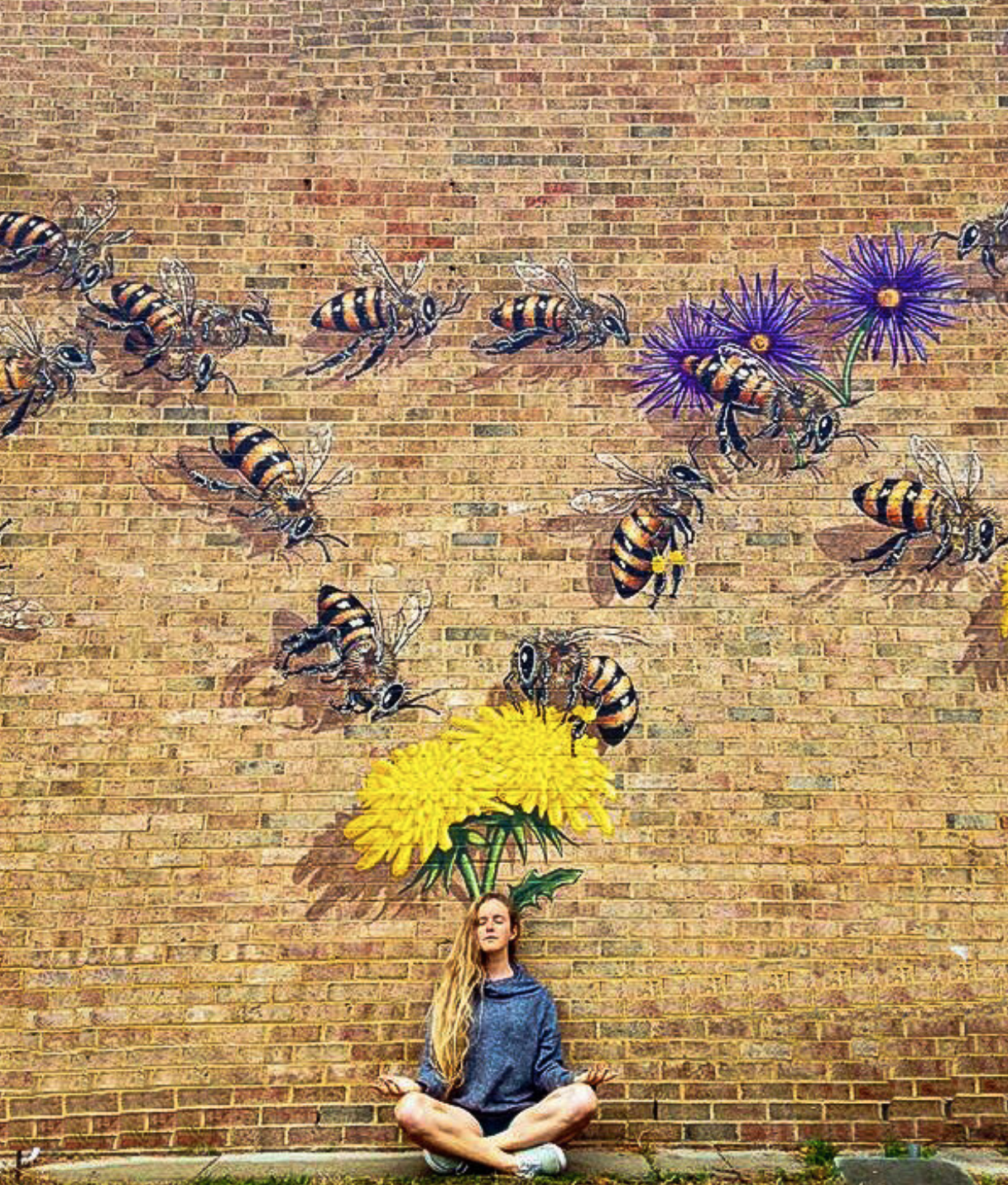
The Good of the Hive Mural @ Carrboro Fire Station, Carrboro, NC
“Bees never forget that they are part of something bigger than themselves… their hive is a part of them. What if we embodied this idea? What if we got curious about the world and each other again instead of intimidated by it? This is why I turn walls into windows – to remember that we are all connected… that separation is an illusion.” -Artist, Matt Willey
Honey Bee Colonies
A honey bee colony typically consists of three kinds of adult bees: workers, drones, and a queen.
The job of the queen: Lay eggs
The job of the drones: Mate with the queen
The jobs of the worker bees: Gather nectar, Guard the hive and honey, Care for the queen and larvae, Keep the hive clean, and Produce honey.
As you can see honey bees are social insects. They live together in well-organized groups called colonies. Individual bees cannot survive without the support of the colony. To learn more read this comprehensive article published by the University of Delaware.
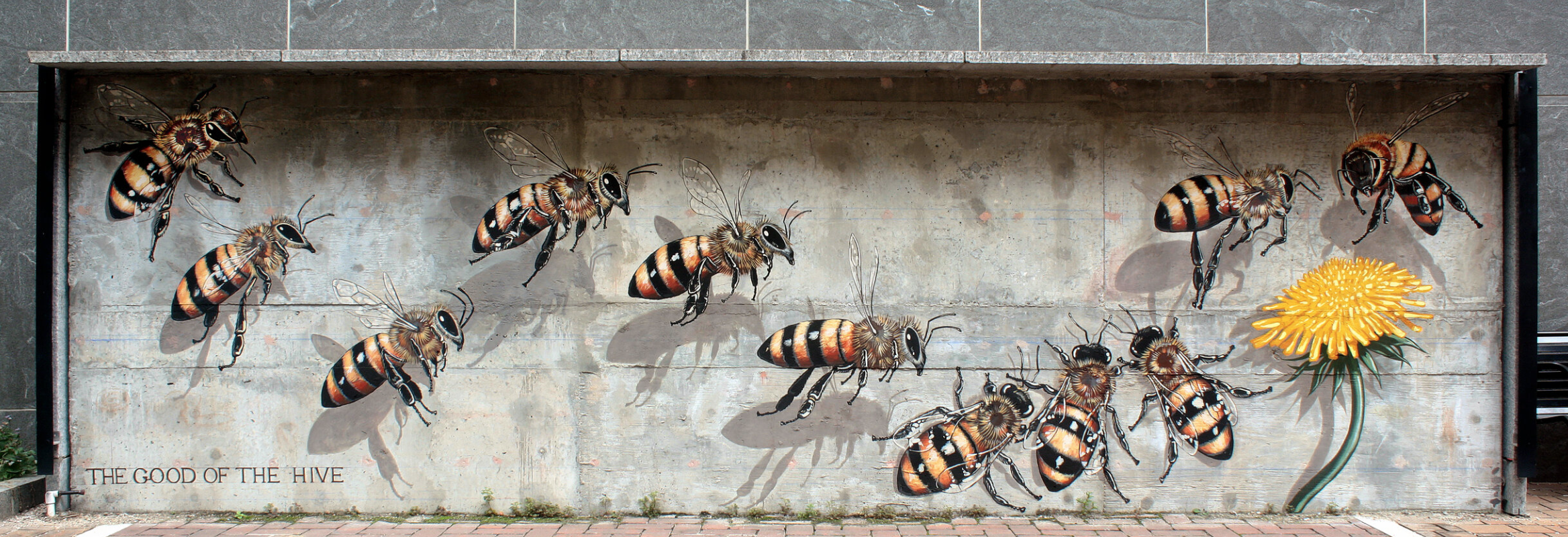
The Good of the Hive Mural @ North Carolina Museum of Natural Sciences, Raleigh, NC
the health of our planet
Through Matt’s mural art, he is able to inspire education about our planetary health. He believes that human and planetary health is collective, and the global hive he is painting is a metaphor for the connectedness of all things. Six years into an estimated 20-year project, Matt has created 35 murals and installations with over 8600 hand-painted bees. He has reached hundreds of thousands of people and created large-scale works at the Smithsonian’s National Zoo in Washington DC, and at Burt’s Bees Global Headquarters. He has collaborated with the World Council of Peoples for the United Nations (WCPUN) and NYC Parks’ Art in the Parks Public Art Program. He has painted in a Tony-Winning Broadway star’s dressing room and his bees are on display at the American Embassy in Beijing, China.

The Good of the Hive Mural @ Harold P. Curtis Honey Co. Labelle, FL
Bees mean Business
According to the U.S. Department of Agriculture, honey bees pollinate $15 billion worth of crops in the United States each year, including more than 130 types of fruits, nuts, and vegetables. 2.70 million bee colonies in the United States, alone, produced 126 million pounds of honey in 2021. That year, the value of honey production in the United States was $321 million according to USDA-National Agricultural Statistics Service (NASS).

The Good of the Hive Mural
The Importance of Bees
A study, published in Proceedings of the Royal Society B, has shown that honey bees are the world's most important pollinators in natural ecosystems across the globe. Did you know, that according to the U.S. Department of Agriculture, one-third of our diet comes from insect-pollinated plants, and the honey bee is responsible for 80% of that pollination? In a single year, one honey bee colony can gather about 40 pounds of pollen and 265 pounds of nectar.
“The Art Starts Creating You” - Matt Willey

Worker Bee, Matt Willey - The Good of the Hive Mural Artist
The Importance of Matt
Follow Matt @thegoodofthehive as he visits schools and communities around the world educating our collective whole about the importance of our bees. In 2023 Matt will continue to move forward in the creation of The Good of the Hive's first documentary film. See the short film trailer by clicking here. Matt could really use some love on this project to keep it moving forward. Plus you can receive rewards and possibly have your name in the credits!

Apiarist: Beekeeper
The scientific name for the honey bee is Apis mellifera, therefore an apiarist is a person who is commonly referred to as a beekeeper and makes a living keeping honey bees. Likewise, an apiary is a location where the hives of honey bees are kept. Apiaries come in many sizes and can be rural or urban depending on the honey production operation.
Here on our farm, Windy Hill, we've enlisted the help of local Apiarist, Mark Antunes. Mark cares for our bees, extracts all honey, and because of our northern weather patterns, he even transports them to more temperate climates each winter. This has proven to be a good thing for their continued survival. Mark is always seeking host farms in this local area for his honey bee hives. If you would like to contact Mark, reach out to me in the comments below and I will get you in touch. I've also included a list of expert websites for your convenience.
rural and urban beekeeping
Rural Beekeeping is really just using a patch of land in more of a rural area used to raise bees. (it does not have to be a farm). Apiarists position one or more honey bee hives in this natural environment to support more pollination. The bees go to work quickly providing their services to enhance the growth of wild flowers, clover, vegetables, and more. If you are thinking about providing your own natural habitat for bees in the future, keep in mind a host farm requires plenty of food sources, water, and a healthy environment with plenty of natural resources such as grass, trees, and plants, and of course, it's important for there to be no pesticide use whatsoever. For your convenience, I've included a short list of supplies you may want to consider at the end of this blog.
Urban Beekeeping is just what it sounds like, an organic method for a city or town to diversify its ecosystem. If you are considering becoming an urban beekeeper, you must first do some research. Be sure to make sure it's legal to keep bees in your town or city. Next, be sure your bees will have enough space and the necessary food and water in order to thrive. Then, be sure to check with your neighbors, because although honeybees are generally not aggressive, if threatened they will sting and it’s very important to always see the advice of a skilled beekeeper before trying this at home.

Honey jars from the honey bees at Windy Hill Farm, PA
Keep some bees
Bee-Keeping Supplies
Beekeeping Suit for men
Beekeeping Suit for women
Beehive
Beehive Smoker
Beehive Smoker Pellets
Honey Serving Supplies
Small Honey jars with cork lids
Small Jar Labels
Honey dipper sticks

The Artist Matt Willey - The Good of the Hive
What is Colony Collapse Disorder
Honey bee health is something we humans have been struggling with in recent years as our honey bee populations have been dwindling. To help you understand, Colony Collapse Disorder is the phenomenon that occurs when the majority of worker bees in a colony disappear and leave behind a queen, a plentiful food supply, and a few nurse bees to care for the remaining immature bees. There is often a combination of environmental factors and other stresses to consider when determining what has a significant effect on bee declines, including humanity's negative impacts.
Honey bee stressors and a link to learn more.
Use of pesticides
Stress due to management practices
Varroa destructor mites
Israeli Acute Paralysis virus and the Nosema parasite
Climate change and habitat loss
Not enough food or poor nutrition
If you enjoyed this blog please feel free to comment below. I read every inspiration that comes my way. Subscribe if you like this blog. Thank you. - Kim
A Little Buzz: Check out The Bee and the Wasp Vintage Rentals. Introducing a Boutique Rental Company specializing in Vintage, Boho, and Rustic looks. Upcycling and reuse are always good for the environment, so for your next event consider rentals as an alternative to new decor. The bees will thank you.


Pink Dahlia with honey bee
If you’re a blogger, what’s your favorite SEO Tool? I’ve had much keyword success with RankIQ. Learn more here. This post contains affiliate links which means I make a small commission at no further cost to you. Thank you very much.

Herbs: How to Grow, Harvest and Dry Your Own
How to grow, process, and dry herbs.

Fresh Herbs on the Kitchen Island at Windy Hill Farm.
Herbs and spices are so beneficial to our health and add fantastic flavor to our food but have you seen how much they cost right now? Check out the spice aisle the next time you’re at the grocery, it’s astounding. Just yesterday I went to buy 4 spices and dried herbs and I honestly asked customer service what was going on. The poor woman was unsure but mumbled something about Covid or possibly Ukraine. I don’t think she knew. So I bought what I needed, came home, and decided to dig up an old post about the herbs I grow and process here at Windy Hill and bring it back to life. I hope you enjoy.
An Herb Garden
Years ago we had this little enclosed garden built because, here in Pennsylvania, our deer problem is REAL. I love seeing them daily, but they come in nightly and decimate most of our flowers and plants. We commissioned a local carpenter to build this outer garden structure and raised bed. I found a vintage flower trellis, sawed off the legs, and hung it at the entrance to serve as my door. At first, I used it to grow flowers and some vegetables but in recent years it has become the home sweet home for my herb garden.
In this garden, I grow many of the standards we all love, Oregano, Parsley, Chives, Rosemary, Thyme, Eucalyptus, Catmint, Lemon Verbena, Bee Balm, Dill, Marjoram, Chamomile, and Basil. Every spring I try to add something new and different after I see what comes back. It’s a very pleasant plot that really comes in handy for cooking and even sometimes in flower arrangements.
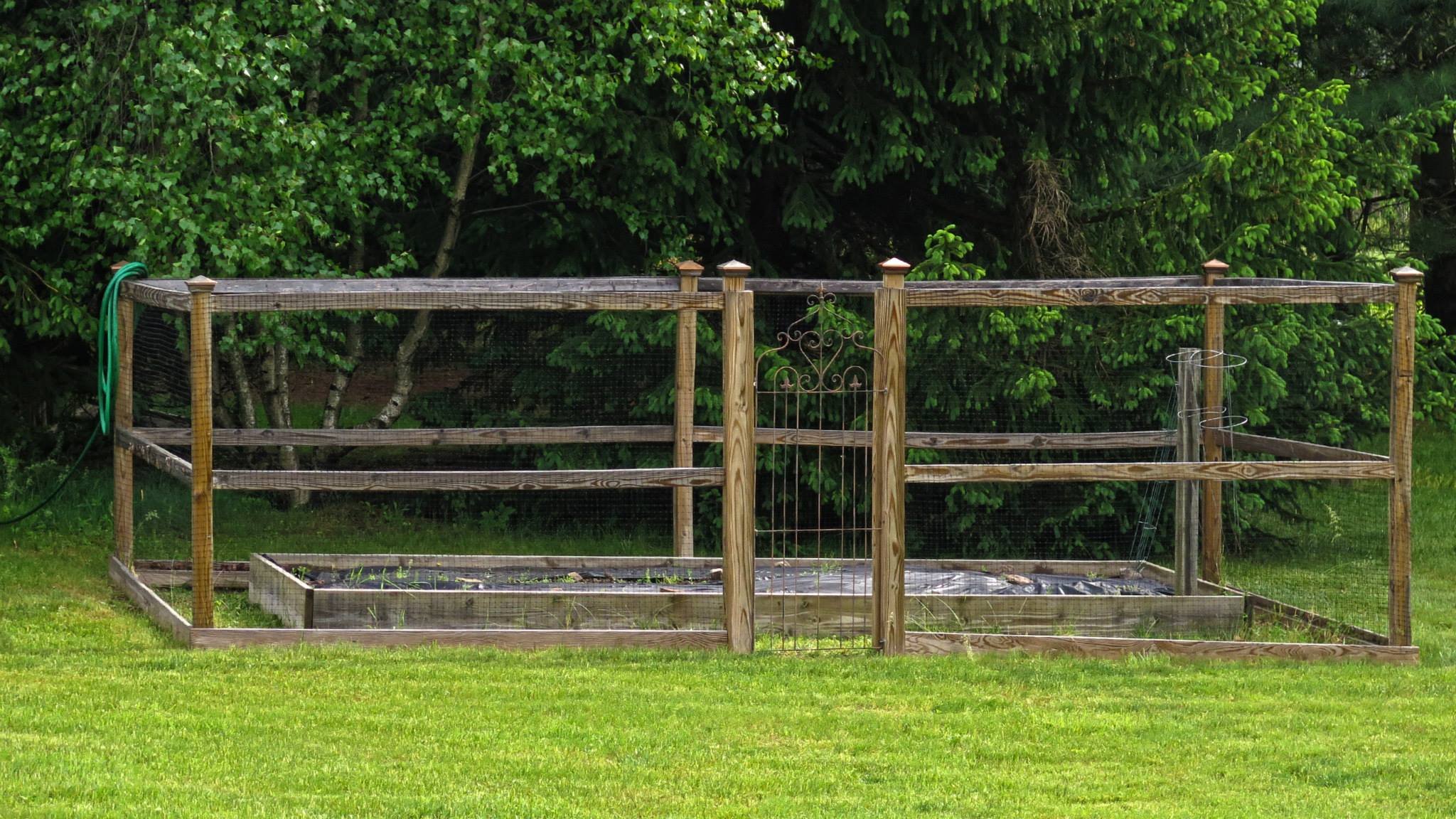
Windy Hill’s gated garden in early spring.
Herbs for cooking and decor
It’s true, I use many of these fresh herbs when I cook but I also sell them to local bakeries where they use them to adorn their cakes or other desserts. When requested, I also use fresh herbs to create cake crowns or wreaths for special occasions.

Cake: One Sweet Baking Co.

Cake: One Sweet Baking Co.
Scatter the herbal Goodness
Because I also try to use all of Windy Hill Farm, I plant herbs all around the property. Like you, I’ve been warned about the hazards of mint but sometimes I just plant it anyway as it’s a better ground cover than nothing and it keeps our honey bees happy. Here is a little patch of mint that grows next to our cottage. It’s November, but it’s still going strong. Mint is great for tea, salad, bouquets, or just a snack.
There is a great big patch of lemon balm, a less-known member of the mint family, that was growing in our backyard for probably hundreds of years! In 2016 I added some apple mint to the patch because I wanted that sturdy and tall apple mint for my arrangements for Studio Sprig. My daughter then painted a wooden sign to say “Lemon Balm Lane”, which I hammered right into the ground. I use the abundant lemon balm to make pesto when I’m low on basil. It smells great in bouquets and salads and makes for a nice little jar of scent to give to a friend for their kitchen window. The apple mint is flourishing and it usually makes its appearance in vase arrangements as a beautiful filler.

Everyone’s Beloved lavender
Next to our barn at Windy Hill is a mini rock wall upon which I planted some lavender. Everyone knows how nice it is to have lavender that you can just cut whenever you want. Find a good spot and try planting some in the spring. This area by our barn has good drainage and stays pretty dry, so this Mediterranean herb seems to like it here. After some harsh Pennsylvania winters, I sometimes need to replenish some of the plants, but over the last few, the lovely perennial has been mighty and strong.

Windy Hill’s barn rock wall of lavender.
Enjoy drying herbs
When you harvest your lavender it’s really nice to hang it upside down and enjoy it for a little while before giving it away or cooking with it. It’s just so pretty to look at and you can use it to make so many unique things. Surprisingly, I’ve made shortbread cookies with lavender and they are delicious. I recommend you look around for your nearest lavender farm or better yet, just start grow your own.
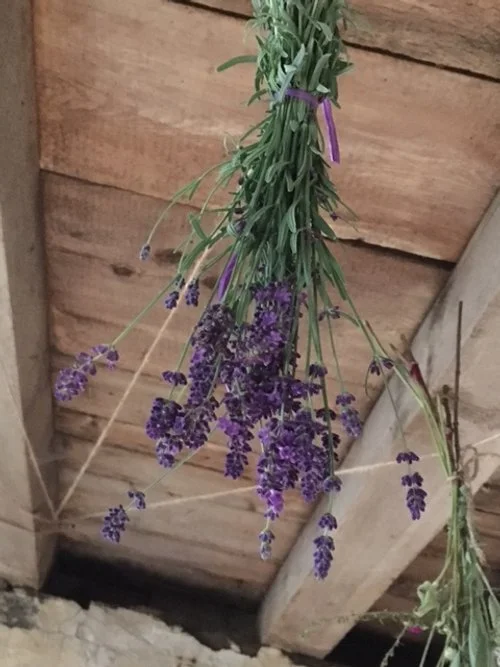
The Windy Hill barn is a great place to hang lavender.
a surprising sunny Delight
Marigolds are another herb that I bet you weren’t thinking about. Here’s what I love about marigolds. I first bought them a few years ago to place around my garden to deter the rabbits. I enjoyed the vibrant flowers all season and in the fall the flowers began to dry up so I gathered them to harvest the seeds. I just popped the dried flower heads into a brown paper lunch bag and waited until I had time to pull them apart.
When I had a few minutes, I pulled each flower head apart and hundreds of seeds fell out. I saved them all winter in the paper bag, giving little bunches to friends so they could sprinkle them into their own gardens in the spring. You’ll be amazed at how many seeds each flower produces. I think I’ll have marigolds forever and I only had to buy them once.
This garden below is the result of a small sprinkling all along the edge of this building. As I said before, it’s November and they are still going strong. I can’t even harvest until they dry up. But this tremendous crop will yield tons of seeds that I can sprinkle everywhere next year. And the great thing is that Marigolds are edible. The flowers lend a dash of color to many recipes while adding a mild flavor to drinks, soups, and pesto. And I just learned that the food industry uses marigold as a natural dye to give cheese and butter a more appealing yellow. The dried flowers are also put in certain teas to make them look more attractive. So grow some marigolds, they couldn’t be easier.

Windy Hill’s Marigold Garden.
Pops of Herbal fun
Don’t worry if you don’t have a lot of land, instead make good use of pots and planters. I usually tuck little bits of lavender, basil, or thyme into all of my flower planters around the property. The bees really love it and I think the flowers benefit from the herbal good vibes. So if you have limited ground or garden space, just squish a few herbs in a window box, a vintage watering can, or a flower pot on your porch. The more the merrier.

Herb Harvesting
I usually begin to harvest my herbs in mid-summer. Like many cut flowers, herbs love a good cut. Always use a clean, sharp shear when cutting flowers, herbs, or any plant because you want to minimize the bacteria getting into the plant. Herbs seem to produce more readily once they are harvested the first time. It's best to harvest herbs in the morning while the leaves are still saturated with flavor. Bring everything in and give it a really good wash. Then lay them out on the counter for a few hours if you intend to dry and store them.
Herb drying
When I decided I wanted to begin drying lots of herbs, I created my own herb drying rack in our pantry because I couldn’t find one I thought was attractive. Most looked like giant butterfly habitats and I didn’t really want that hanging in my house. If you’re interested, you can read my post on how I created this stylish herb drying rack here.
After I harvest the herbs, I clean and drip dry them on the counter before I place the herbs into these baskets which I sometimes line with cheesecloth just so water isn’t dripping on the floor. Be sure to spread the herbs out so that air can circulate properly. That’s it. I just wait a few days or a week and let the air circulation do its thing.

DIY Herb Drying Rack for pantry or kitchen.
Herb Processing
After the herbs are fully dry, I strip the leaves with this little Joie Leaf Herb Stripper and place them into a mini coffee/herb grinder or if you have lots, use a food processor until well-chopped. I’ve linked the products I use here and at the end under shop this blog. And be sure to eliminate all stems before grinding. Another method is to just crinkle up the dried leaves in your hand. I find this works better for tea because the coffee grinder makes the leaves too fine for a tea ball. I learned that the hard way.

Processing and Chopping Fresh and Dried Herbs.
Herb Storing
Once dried and processed the way you like, scoop all the herbs into sweet little magnetized spice tins with air vents or some other storage container. Keep in mind a ball jar with a lid will not work because the herbs look pretty but they will eventually mold. I’ve also used brown kraft lunch bags which I label with a sharpie. Just don’t use plastic sandwich bags because of the moisture and the mold. I found these spice tins work well because they keep things well labeled and allow air to circulate. I have my magnetized tins neatly displayed on the side of my refrigerator where they are easily accessible and I store the overflow in lunch bags. I replenish as needed.

Stylish, Magnetic Herbal Tins with Labels.

Magnetized Spice and Herb Canisters with Labels.
HERB enjoying
That’s about it. Once you have them you can enjoy them in teas, on pizza, or in your homemade olive oil dip! Here I just scattered some herbs on homemade dough before we baked it. Delicious little snack with olive oil, some fruit, and a slice of hard cheese.

Homemade dough with dried, chopped herbs for olive oil dipping.
HERB sleeping
Take some time this winter to contemplate Your Herbal Adventure. I’ll provide some links to products for your holiday list so that you can use them this winter to plan and dream your perfect spring.

Windy Hill’s Gated Garden in winter.
Learn: A great handy book to learn about herbs: Herbs by Leslie Bremness
Create: Try growing a mini herb garden in your kitchen this winter with this Window Herb Garden
Inspire: Begin creating little bunches of herbs to give to friends and see how the love grows.
If you’d like to try your hand at processing and drying herbs, here is the list of supplies I used:
SHOP THIS BLOG:
Lime Green Joie Leaf Herb Stripper
Garden Shears
Herbal Tins with Labels
Mini coffee grinder
Shaker Pegs
Large Metal Baskets
Small Metal Baskets
Curtain Clips
Cheesecloth
If you are enjoying my blog, please sign up to receive my blog updates on my homepage.


I’m always here to help you with your creative journey. Please sign up to receive blog post notifications and follow Studio Sprig on Instagram, Facebook, and Pinterest. I look forward to connecting. If you’re a blogger, what’s your favorite SEO Tool? I’ve had much keyword success with RankIQ. Learn more here. - Kim
This post contains affiliate links. As an amazon associate, I earn a small commission at no further cost to you. Thank you.
Hi, I’m Kim. Welcome to Studio Sprig.
Kim Bensing’s original watercolors and designs are now available on wallpaper and fabric. To order visit Studio Sprig’s design library on Spoonflower. Contact me if you need assistance.
-
EVENTS
23
- Nov 3, 2026 Create a Winter Nature Bar to Entertain your Holiday Guests Nov 3, 2026
- Oct 23, 2026 Wrapped in Wonder: The Art of Giving a Gift Oct 23, 2026
- Sep 26, 2026 Homecoming Flowers: A Beautiful Tradition Then and Now Sep 26, 2026
- Sep 23, 2026 Choose Wedding Flowers With Meaning: How to Create a Bouquet That Tells Your Love Story Sep 23, 2026
- Sep 21, 2026 The Pre-Prom Tradition Every Mom Should Try: Host a Backyard Bouquet Party Sep 21, 2026
- Sep 18, 2026 Lambertville’s Halloween Magic: A Funky, Creative Rivertown Comes Alive Sep 18, 2026
- Aug 20, 2026 How to Host a Beautiful Flower Bar: The Ultimate DIY Flower Bar Party Guide Aug 20, 2026
- Aug 19, 2026 How to Decorate Cakes with Fresh Flowers: Floral Wreaths, Crowns & More Aug 19, 2026
- Aug 19, 2026 Decorating Cakes with Fresh Flowers Aug 19, 2026
- May 18, 2025 How to Make DIY Bouquets for Prom May 18, 2025
- May 7, 2025 How to Preserve and Use Your Spring Flowers - All Year Long May 7, 2025
- Feb 27, 2025 Get Excited for The Flower Show Feb 27, 2025
- Feb 14, 2025 Historic Castles. What are they used for? Feb 14, 2025
- Jan 31, 2025 Creative Ideas For Your Valentine Jan 31, 2025
- Jan 28, 2025 How An Invitation Can Tell Your Love Story Jan 28, 2025
- Jan 23, 2025 How to Design a Valentine Tree Jan 23, 2025
- Jan 16, 2025 Host a Fabulous Bouquet Bar for Valentine's Day Jan 16, 2025
- Apr 4, 2023 Why Choose Seasonal Flowers for Your Special Occasion? Apr 4, 2023
- Feb 1, 2023 10 Ideas for an Eco-Friendly Event or Wedding Feb 1, 2023
- Nov 14, 2022 A Family Tree Inspired Wedding Invitation Nov 14, 2022
- Oct 3, 2022 How to choose flowers that have sentimental meaning Oct 3, 2022
- Nov 9, 2020 Simplified Wedding Ceremony during Covid Nov 9, 2020
- Apr 2, 2019 Why You Should Choose Seasonal Prom Flowers Apr 2, 2019
-
HOME
23
- Sep 9, 2026 How to Name a Farm: 10 Meaningful Ideas for Creating a Name With a Story Sep 9, 2026
- Sep 1, 2026 How to Preserve Flowers for Creative Projects Sep 1, 2026
- Jul 2, 2026 How to make your own flower confetti Jul 2, 2026
- Apr 22, 2025 How We Painted our Barn Apr 22, 2025
- Apr 16, 2025 What to Plant for Mesmerizing Spring Blooms Apr 16, 2025
- Apr 8, 2025 Narcissus AKA Daffodil - What's Blooming at Studio Sprig Apr 8, 2025
- Apr 1, 2025 Glory-of-the-Snow - What's Blooming at Studio Sprig Apr 1, 2025
- Mar 19, 2025 How we turned an Artist Studio into a Weekend Retreat Mar 19, 2025
- Mar 12, 2025 The Mighty Crocus - First to Bloom - What's Blooming at Studio Sprig Mar 12, 2025
- Jan 23, 2025 How to Design a Valentine Tree Jan 23, 2025
- Jan 16, 2025 Host a Fabulous Bouquet Bar for Valentine's Day Jan 16, 2025
- Jan 9, 2025 How to Make Your Own Mint Tea Jan 9, 2025
- Jan 7, 2025 How To Create A Courtyard Jan 7, 2025
- Jan 2, 2025 How to Create a Stunning Centerpiece Jan 2, 2025
- Mar 27, 2023 How We Transformed Our Farmhouse Kitchen by Reusing, Updating, and Thrifting: (Coffee Bar) Mar 27, 2023
- Mar 27, 2023 How We Transformed Our Farmhouse Kitchen by Reusing, Updating, and Thrifting Mar 27, 2023
- Mar 1, 2023 How and Why We Love Historic Homes Mar 1, 2023
- Jan 3, 2023 Eliminate Sneaky Sugars Jan 3, 2023
- Dec 14, 2022 How to Create a Pretty Mini Bar with Items You Already Own Dec 14, 2022
- Nov 21, 2022 Friendsgiving At Our Farm Nov 21, 2022
- Nov 9, 2022 Herbs: How to Grow, Harvest and Dry Your Own Nov 9, 2022
- Nov 9, 2022 DIY Herb Drying Rack: Herb Drying at Home Nov 9, 2022
- Oct 12, 2022 Have you ever thought about creating a beautiful water feature? Oct 12, 2022
-
STYLE
27
- Oct 6, 2026 Where Flowers Become Art, Experiences & Memories Oct 6, 2026
- Sep 1, 2026 How to Preserve Flowers for Creative Projects Sep 1, 2026
- Aug 20, 2026 How to Host a Beautiful Flower Bar: The Ultimate DIY Flower Bar Party Guide Aug 20, 2026
- Aug 19, 2026 How to Decorate Cakes with Fresh Flowers: Floral Wreaths, Crowns & More Aug 19, 2026
- Aug 19, 2026 Decorating Cakes with Fresh Flowers Aug 19, 2026
- Jul 2, 2026 How to make your own flower confetti Jul 2, 2026
- Nov 3, 2025 Creating a Pressed Flower Frame Nov 3, 2025
- May 7, 2025 How to Preserve and Use Your Spring Flowers - All Year Long May 7, 2025
- Jan 28, 2025 How An Invitation Can Tell Your Love Story Jan 28, 2025
- Jan 23, 2025 How to Design a Valentine Tree Jan 23, 2025
- Jan 6, 2025 How to Create Oyster Shell Necklaces Jan 6, 2025
- Jan 2, 2025 How to Create a Stunning Centerpiece Jan 2, 2025
- Mar 14, 2023 How to Make Sentimental Easter Eggs Mar 14, 2023
- Mar 6, 2023 How to Enjoy The PHS Philadelphia Flower Show Mar 6, 2023
- Feb 13, 2023 Let's Save The Bees Feb 13, 2023
- Feb 1, 2023 10 Ideas for an Eco-Friendly Event or Wedding Feb 1, 2023
- Jan 12, 2023 A Great Way to Help Kids with Cancer (PENN STATE) Jan 12, 2023
- Dec 14, 2022 How to Create a Pretty Mini Bar with Items You Already Own Dec 14, 2022
- Nov 29, 2022 Lunch and Dinner -Studio Sprig Style Micro Blog Nov 29, 2022
- Nov 14, 2022 A Family Tree Inspired Wedding Invitation Nov 14, 2022
- Nov 9, 2022 DIY Herb Drying Rack: Herb Drying at Home Nov 9, 2022
- Oct 30, 2022 Lambertville, Nj , A Funky, Cool Rivertown You Must Visit on Halloween. Oct 30, 2022
- Oct 19, 2022 How to choose an interesting place to stay when you travel or go on vacation Oct 19, 2022
- Oct 12, 2022 Have you ever thought about creating a beautiful water feature? Oct 12, 2022
- Oct 3, 2022 How to choose flowers that have sentimental meaning Oct 3, 2022
- Feb 1, 2021 How to design marketing materials for your small business Feb 1, 2021
- Oct 29, 2020 Surprise the bride when you can't come to her wedding Oct 29, 2020